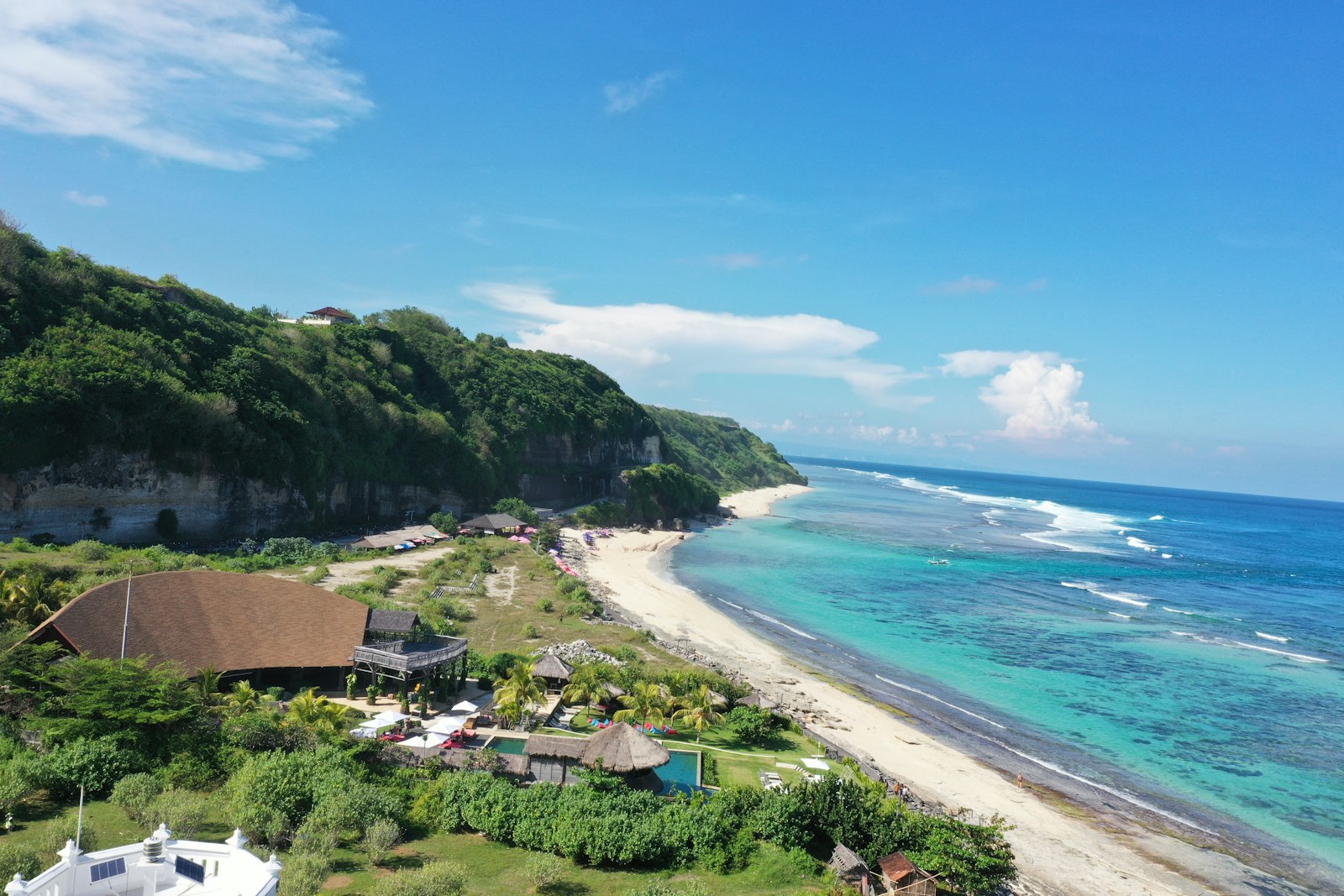

How to read this: Sumba Villa Investment is an independent investment-intelligence guide — we research, compare and explain Sumba land and villa opportunities, then route serious enquiries to a vetted partner. We are not a broker, developer, financial adviser, notary or law firm, and this is general information, not investment, tax or legal advice. Foreigners cannot own freehold (Hak Milik) land in Indonesia, and nominee arrangements are risky and may be unlawful — never rely on them. Figures here are indicative ranges and can change; we never promise returns. Always do your own due diligence and verify everything with a licensed Indonesian notary (PPAT) and qualified counsel before you commit.
Off-plan villa risk in Indonesia refers to the cluster of financial, legal, and construction exposures a buyer takes on when paying for a villa that does not yet exist — a deposit, stage payment, or full purchase price against a developer’s floor plan, render, and promise of delivery. Across Indonesia those risks are meaningful; on a frontier island like Sumba, where buying off plan property sumba carries layers of exposure not present in established markets, where infrastructure is self-provided, title records are patchy, and a secondary buyer market barely exists, they are amplified considerably. This piece sets out what those risks are, how Sumba sharpens each one, and what contractual protections are worth insisting on before a single rupiah moves.
This is general information, not investment or legal advice. No completion date, return, or approval is guaranteed or implied. Review every off-plan contract with a licensed Indonesian notary, PPAT, and qualified legal counsel before making any payment.
What Off-Plan Actually Means in the Indonesian Context
Pre-construction villa risk indonesia — that is, the exposure of buying before a villa is built — is not uniform. A pre-sales agreement on a Bali villa in a corridor with five completed sister projects, an established agent network, and a dense legal community is a different instrument — practically, if not legally — from a pre-construction villa agreement on a remote Sumba headland where the developer may be breaking ground for the first time. This guide focuses on the Sumba end of that spectrum.
In Indonesia, an off-plan purchase — known loosely as pre-sales or inden in the local market — is a contract where the buyer commits money before construction is materially complete, often before it has started. The developer gets working capital; the buyer theoretically gets a lower entry price. That trade-off exists everywhere. What differs between Bali’s established resort corridors and a remote West Sumba clifftop is the thickness of the market around you: the number of comparable completed projects you can verify, the density of licensed professionals, the reliability of local courts, and the speed at which you can exit if something goes wrong.
In Sumba, all four of those buffers are thin.
The Core Exposures: What Can Go Wrong
Developer Default or Delay
Developer default off plan indonesia — the scenario where a developer fails to complete an off-plan project — is not a theoretical concern. It has occurred across multiple Indonesian markets and there is no reason Sumba is exempt.
The most direct pre-construction villa risk in Indonesia is that the developer does not deliver — either because of insolvency, because they have over-sold and under-capitalised, or because the economics of a remote island project deteriorated between signing and completion. Sumba is not immune to any of those scenarios, and there is a particular risk in frontier markets: a developer’s viability may rest on selling enough units to fund the project’s infrastructure — roads, power, water — before those costs are fully known. If sales stall, the cascade can run from delayed groundworks to halted construction to a partially built shell with an encumbered land title.
Nationally, Indonesia has no equivalent of the UK’s New Homes Quality Board or the Australian state-level deposit protection schemes. There is no statutory escrow requirement for off-plan residential sales outside of certain regulated strata developments. What protection exists is largely contractual — which means it is only as strong as the contract the developer offers and the buyer negotiates.
The Gap Between Render and Reality
Marketing materials for buying off plan property in Sumba can be striking — clifftop infinity pools, architectural renders of a finished resort village, sunrise views over the Indian Ocean. The legal question is how much of that render is embedded in the contract. If the specification in the sale and purchase agreement (PPJB — Perjanjian Pengikatan Jual Beli) is vague about materials, finishes, pool size, and FF&E, the developer has wide latitude over what they actually build. Substituting mid-range concrete block for the rendered stone cladding, or a smaller pool, or fewer communal amenities, may be entirely within the terms of a poorly drafted agreement.
In an established market you can walk five minutes to a completed sister project and compare. In Sumba, in many cases, there is no completed sister project. You are buying a brand-new typology in a market that has not yet proven its construction quality at scale.
Weak Buyer-Protection Enforcement in a Remote Regency
Legal enforcement in Indonesia is generally weighted toward the party with more local presence and relationships. A foreign buyer — or a Jakarta-based Indonesian investor — pursuing a developer for breach of contract in West Sumba Regency (Kabupaten Sumba Barat) faces the practical challenge that the local court system is distant, slow, and expensive to engage. Civil litigation in Indonesia routinely takes years. Alternative dispute resolution clauses in developer contracts may point to commercial arbitration in Jakarta, which is more predictable but still costly and time-consuming.
None of this means legal recourse is impossible. It means the buyer’s first line of defence must be the contract itself — not the assumption that a court will make them whole quickly if the project fails.
Payment Released Before Completion
A standard developer off-plan structure in Indonesia releases buyer funds progressively to the developer as stages are claimed — foundation, structure, roof, fit-out, handover. The risk is that payments are released on the developer’s say-so, rather than against independently verified construction progress. If the developer self-certifies completion of stages and the buyer has no independent inspector on site, money can flow well ahead of physical progress. On an island where a buyer may be committing remotely and cannot visit monthly, that gap is wide.
Insisting on third-party milestone sign-off — a licensed Indonesian architect, surveyor, or project monitor — adds friction and cost, but it is the only practical way to prevent payment from running ahead of bricks.
Sumba-Specific Risk Layers
Self-Provided Infrastructure: The Hidden Cost Multiplier
Beachfront and clifftop land in West Sumba frequently has no grid electricity, no piped water, and no sealed road access. High-end completed projects in the area — including Nihi Sumba, which has been operating since its earlier incarnation in 1988 — have typically self-provided these services. That is not a problem if the developer has accurately costed it. It is a serious problem in an off-plan sale where infrastructure costs are uncertain at signing.
Sumba’s remoteness means materials, skilled labour, and equipment all arrive at a logistics premium. There is no reliable published construction-cost benchmark for the island — Bali mid-market reinforced-concrete villa construction is broadly quoted in practitioner ranges of around USD 600–1,000/m² (as a Bali baseline, not a Sumba figure), and remote island projects typically run materially higher when self-provided roads, power and water systems are added. Any developer projecting a cost-per-key in Sumba without an itemised, independently verified BOQ (bill of quantities) is projecting into significant uncertainty. If that uncertainty resolves upward during construction, either the build quality suffers or the developer faces a capital shortfall — neither outcome serves the buyer.
Ask for the detailed infrastructure cost schedule before signing. Ask who bears cost overruns. If the contract is silent, assume the developer’s incentive is to pass them through in some form.
Title and Adat Issues Surfacing Mid-Build
Sumba has well-documented land tenure complexity. Customary (adat) land rights in the island’s clan-based social structure — where land attachment runs through kabisu (clan) lineages — can mean that a parcel shown on a certificate was transacted without the consent of all parties who hold a legitimate customary interest. This is not unique to Sumba, but it is more acute here than in Bali or Lombok because formal titling coverage is lower and BPN (Badan Pertanahan Nasional, the national land office) mapping in remote NTT (East Nusa Tenggara) regencies has historically been less complete.
The consequence for an off-plan buyer is that a title dispute may surface after construction has started — after foundation money has been paid. A community claiming customary rights to a parcel can interrupt construction works, require negotiated settlement, or in the most serious cases result in protracted legal conflict. The land dispute at Marosi Beach in West Sumba, which has been reported in Indonesian media involving coastal land, investor interests, and local community protests, illustrates that these are not theoretical scenarios. (Verify current status via independent Indonesian legal research before relying on any media account as current fact.)
A thorough title check must happen before any off-plan payment — including checking the certificate’s authenticity at BPN, requesting a land-book extract (buku tanah), confirming there are no recorded encumbrances, and asking a local legal professional specifically about adat land history on that parcel. That last step is the one most buyers skip because it requires local knowledge and adds time. It is also the one most likely to surface the risk that matters most on Sumba.
Thin Resale Market: The Exit Problem
Buying off plan assumes either that you will hold and operate the completed villa, or that the asset will be liquid enough to sell if circumstances change. In Sumba, the resale pool is genuinely thin. There is no MLS, no SQM-level transaction database, and no established agent network with deep buyer lists. The handful of brokers active on the island work primarily on primary sales. Secondary sales of stalled or completed villas happen, but slowly, at prices that are difficult to verify independently, and with a buyer pool that is materially smaller than equivalent markets in Bali or even Lombok.
If a project stalls mid-construction, the position is worse still: an unfinished building on an encumbered land title in a remote regency is among the hardest categories of asset to liquidate in Indonesian real estate. The discount required to find a buyer may be severe.
This is why ROI projections from developers — the “18–20% per annum” figures that circulate in Sumba marketing materials — must be tested against the exit assumption, not just the income assumption. A projected return that assumes a liquid resale in year five at a multiple of entry price is a projection built on two unverified premises in a market with no comparable transaction history. That is not a reason to refuse to invest. It is a reason to treat the projection as a planning scenario, not a commitment, and to be clear on what your investment looks like if neither the income nor the exit materialises on schedule.
Developer Projections: What the Numbers Are and Are Not
A developer’s projected ROI, occupancy rate, and nightly rate are financial models — not guaranteed outcomes, not independent valuations, and not derived from a market with a long track record. In Sumba specifically:
- No public occupancy or yield data exists for Sumba villas. Any figure a developer quotes is an internal assumption. Nihi Sumba is the island’s flagship hospitality reference point, and its ultra-luxury positioning (founded in various forms from 1988, substantially redeveloped after the 2012 acquisition by Chris Burch and James McBride, operating 27–33 villa keys on approximately 567 acres) is not replicable by a smaller standalone project targeting a different price point.
- Asking prices are not transaction data. Land and villa values cited in Sumba marketing — West Sumba beachfront listings broadly in the IDR 22–24 million per are (100 m²) range as of recent market checks — are asking prices from individual listings, not a cleared-price index. There is no public transaction database for Sumba property.
- Completion-date promises are projections. Construction timelines in remote Indonesian locations routinely extend for reasons ranging from permit delays to wet-season access issues to supply-chain disruptions. A contract that specifies a completion date without penalty provisions for delay, or that allows the developer unilateral extensions, is a contract that moves delivery risk entirely to the buyer.
None of this means every developer projection is dishonest. Some projects will deliver and perform. The point is that a buyer cannot distinguish an honest projection from an optimistic one without understanding the track record of the specific developer, the independence of the assumptions, and the contractual consequence of missing them.
A Comparison of Off-Plan Risk Factors: Sumba vs Established Markets
| Risk Factor | Bali (Established Corridor) | Sumba (Frontier) |
|---|---|---|
| Developer track record verifiable | Often yes — completed projects exist | Often no — limited precedent |
| Title risk (adat/double-cert) | Present but better-mapped | Higher — thinner BPN coverage in NTT |
| Infrastructure certainty | Grid power and roads typically available | Often self-provided; cost uncertain |
| Secondary buyer market | Active, brokers with buyer lists | Very thin; slow, deep-discount exits |
| Comparable transaction data | Partial (agent networks, AirDNA) | Essentially none publicly |
| Legal enforcement access | Closer, more practised legal community | Remote regency; enforcement slow |
| Rental income data (independent) | AirDNA, OTA aggregators | None published independently |
What Contractual Protections Are Actually Worth Insisting On
Staged Payments Tied to Verified Milestones
A payment schedule should tie each tranche to a specific, objectively verifiable construction event — not a calendar date and not a developer self-certification. The schedule should specify who verifies completion of each milestone (ideally an independent licensed architect or surveyor nominated by the buyer or agreed jointly), and what happens if a milestone is missed: is the next payment deferred? Is the buyer entitled to a refund after a defined cure period? A contract that releases 50% of the purchase price before a foundation is poured is a contract that has transferred most of the capital risk to the buyer before a single material commitment has been made by the developer.
Escrow Where Achievable
Indonesian property transactions rarely use third-party escrow in the way Australian or US buyers expect. However, it is possible to negotiate arrangements where buyer funds are held by a neutral notary or through a joint account with release conditions tied to milestones. Whether a specific developer will agree to this depends on their capitalisation and whether they need your funds immediately to start the project. If the answer to the latter is yes — if your deposit is genuinely funding the first works — that itself tells you something about the project’s financial structure that is worth knowing before you sign.
A Detailed Construction Specification in the Contract
The PPJB should incorporate, by reference or as an appendix, a specification document listing materials, structural standards, finishes, FF&E, communal areas, and the timeline for each. Vague language like “similar quality to the render” or “as per developer’s standard” gives the developer discretion you do not want to grant them. The more precise the specification, the more clearly a deviation can be identified as a breach.
Independent Title Verification Before First Payment
This is not optional on Sumba. Before any payment: verify the land certificate at BPN, request the land-book extract, check the RTRW (spatial plan) zoning to confirm the parcel is in a permissible building zone and not designated LP2B (protected agricultural land under Law 41/2009), and instruct a local legal professional to investigate the adat history of the parcel. Do this independently — not through the developer’s recommended notary. The developer’s notary has a relationship with the developer; your notary works for you.
Penalties for Developer Default and Delay
A credible off-plan contract specifies what the developer owes the buyer if completion is delayed by more than a defined period, and what constitutes a refundable termination event if delay extends beyond a second threshold. Penalty clauses for delay, and refund provisions with specific timeframes, are the contractual teeth that make the developer’s commitment real. If a developer resists including them, that resistance is informative.
The Land Right Underneath the Villa
An off-plan villa on Sumba will typically sit on one of three land-right structures:
- Hak Sewa (Leasehold)
- A contractual lease — the most common structure for foreigners buying into Sumba projects. Not a registered title right; enforceability depends on the lease terms and the landlord’s continued cooperation. Typical Sumba leases marketed at 25–30 years with extension options to 70–80 years contractually; those extensions are not automatic and are only as reliable as the underlying landlord’s solvency and goodwill. Verify current contract terms with qualified counsel — as-of date matters for any lease you sign.
- Hak Pakai (Right to Use)
- Available to resident foreigners (KITAS/KITAP holders) and foreign legal entities with Indonesian representation. Under current regulations (Government Regulation 103/2015 and subsequent ATR/BPN rules), the structure allows up to 30 years plus a 20-year extension plus a 30-year renewal — up to 80 years total — but this is regulation-dependent and the exact terms should be verified against the current ATR/BPN ruleset at the time of signing, not from this article.
- HGB via PT PMA
- A foreign-invested Indonesian company (PT PMA) can hold Hak Guna Bangunan — a registered, more secure right to build. Terms post-Omnibus Law are broadly cited as 30+20+30 years but are regulation-dependent (verify GR 18/2021 and Permen ATR/BPN 5/2025 currently). PT PMA structure carries its own compliance requirements including minimum investment plan thresholds (commonly cited around IDR 10 billion per business line, subject to BKPM/OSS policy — verify current threshold before relying on any figure).
In an off-plan purchase, the critical question is what land right the developer holds at the time of sale, what right will be conveyed to the buyer on completion, and how that transition is documented and enforceable. If the developer is selling on leasehold, inspect the head lease — its term, its renewal provisions, whether assignment to a buyer requires the original landowner’s consent. If any of those elements are unresolved at signing, you are committing capital against an uncertain legal foundation.
Hype to Recognise and Set Aside
The Sumba investment narrative has accumulated a set of claims that circulate as fact in marketing materials. A candid reading of the evidence suggests they should be treated as marketing language, not data:
- “Land prices up 1,200%.” This figure has appeared in developer promotional material. There is no independently verified baseline, no transaction series, and no methodology behind it. It is an attributed claim from a single source, not a market statistic.
- “Beachfront demand up 30% annually.” No independent dataset supports this. Demand for Sumba tourism is growing from a genuinely low base, and that directional observation is fair. The specific percentage is unverifiable from public data.
- “The next Bali.” Sumba is semi-arid, agriculture-focused in NTT provincial planning documents, has two domestic airports (Tambolaka/TMC for West Sumba, Umbu Mehang Kunda/WGP for East Sumba, no international routes), and a tourism volume that is a fraction of Bali’s. The island’s character is genuinely different and genuinely appealing to the right traveller. Whether that translates into Bali-scale liquidity, Bali-scale rental demand, or Bali-scale appreciation is a projection, and not one supported by current data.
- “Up to 18–20% ROI.” Yield projections of this order come from developer models in which nightly rate, occupancy, and operating-cost assumptions all lean toward the optimistic case. No independent Sumba rental yield data exists to validate or challenge them. They are not wrong in the sense of being fabricated numbers — they may describe a plausible scenario. They are, however, projections with no track record behind them, and the “up to” framing means the baseline outcome may be considerably lower.
A Practical Pre-Signing Checklist for Off-Plan Sumba
Before paying any off-plan deposit, the following should be resolved — not partially checked, fully resolved:
- Independent title verification at BPN, including land-book extract and encumbrance check.
- RTRW/zoning confirmation from Dinas PUPR or Bappeda — is the parcel in a zone that permits the proposed use? Is it LP2B protected?
- Adat land history review by a qualified local legal professional — not the developer’s notary.
- Developer track record review — completed projects, delivery history, references from prior buyers, financial standing.
- Infrastructure cost schedule — who provides roads, power, water; what is the estimated cost; who bears overruns.
- Construction specification appended to or incorporated in the PPJB.
- Payment schedule tied to independently verified construction milestones.
- Delay penalty and refund provisions in the contract.
- Clear statement of what land right the developer holds, what right the buyer receives, and how the transition is documented.
- Review by a licensed Indonesian notary and legal counsel instructed independently by you.
This list is not exhaustive and the relative weight of each item will vary by project. It is a floor, not a ceiling.
Frequently Asked Questions
Is buying off plan property in Sumba legal for foreigners?
A foreigner can enter into a pre-purchase agreement (PPJB) for an off-plan villa in Sumba, but the land right they ultimately receive will depend on their legal structure. Foreigners cannot hold Hak Milik (freehold). The practical routes are Hak Sewa (leasehold — a contractual right, not a registered title), Hak Pakai for qualifying resident foreigners, or HGB held through a foreign-owned Indonesian company (PT PMA). Which structure applies to a given off-plan project must be clarified in the contract and reviewed by qualified Indonesian legal counsel before any payment is made.
What happens if the developer defaults on an off-plan project in Indonesia?
There is no statutory deposit-protection scheme for residential off-plan sales in Indonesia equivalent to those in some other markets. If a developer fails to complete, the buyer’s recourse depends on the contract terms — specifically whether there is a refund clause, a delay penalty, or a dispute resolution mechanism. Pursuing a claim through Indonesian civil courts is possible but slow and expensive, particularly in a remote regency. This is why contractual protections (milestone-tied payments, escrow where achievable, clear penalty clauses) need to be in the document before signing, not negotiated after the developer has the money.
How do I verify that the land under an off-plan villa has a clean title?
The starting point is the BPN land office: request a physical and juridical data extract (informasi data fisik dan yuridis) for the specific parcel, which will show the registered holder, any encumbrances, and the certificate type. In Sumba, you should also specifically commission a local legal professional — one with knowledge of East Nusa Tenggara land tenure, not a Bali-based firm without that experience — to investigate the adat land history of the parcel. A certificate can be legitimate on its face and still sit on land with unresolved customary claims. That investigation takes time and costs money; it is considerably less than the cost of a disputed purchase.
Are developer ROI projections for Sumba villas reliable?
They are projections, not guarantees, and they have no historical market data behind them to validate or invalidate. No independent occupancy or yield data is publicly available for Sumba villas. Developer models typically use nightly-rate and occupancy assumptions that may be reasonable in an optimistic scenario and may be significantly off in a base case. Before relying on a projection, ask the developer to show you the line-by-line assumptions: nightly rate by season, assumed occupancy, operating costs including management, OTA commissions, maintenance, insurance, taxes, and land-lease or HGB fees. Then stress-test the model at lower occupancy and a later stabilisation date than the developer projects.
What is the biggest off-plan risk specific to Sumba that doesn’t apply as strongly elsewhere?
The combination of adat land complexity and self-provided infrastructure cost uncertainty is Sumba’s distinctive risk profile. In Bali’s established corridors, infrastructure is generally in place and adat land is more thoroughly mapped into formal titles. On Sumba, a project may be priced on a land cost that reflects the certificate price but not the cost of resolving any underlying customary interests, and a build cost that does not fully account for graded access roads, off-grid power, and water provision. Both of those unknowns can materialise as cost overruns mid-construction — after the buyer has committed capital. Neither appears explicitly in the developer’s marketing materials, which is why independent due diligence on both points is not optional.