How to read this: Sumba Villa Investment is an independent investment-intelligence guide — we research, compare and explain Sumba land and villa opportunities, then route serious enquiries to a vetted partner. We are not a broker, developer, financial adviser, notary or law firm, and this is general information, not investment, tax or legal advice. Foreigners cannot own freehold (Hak Milik) land in Indonesia, and nominee arrangements are risky and may be unlawful — never rely on them. Figures here are indicative ranges and can change; we never promise returns. Always do your own due diligence and verify everything with a licensed Indonesian notary (PPAT) and qualified counsel before you commit.
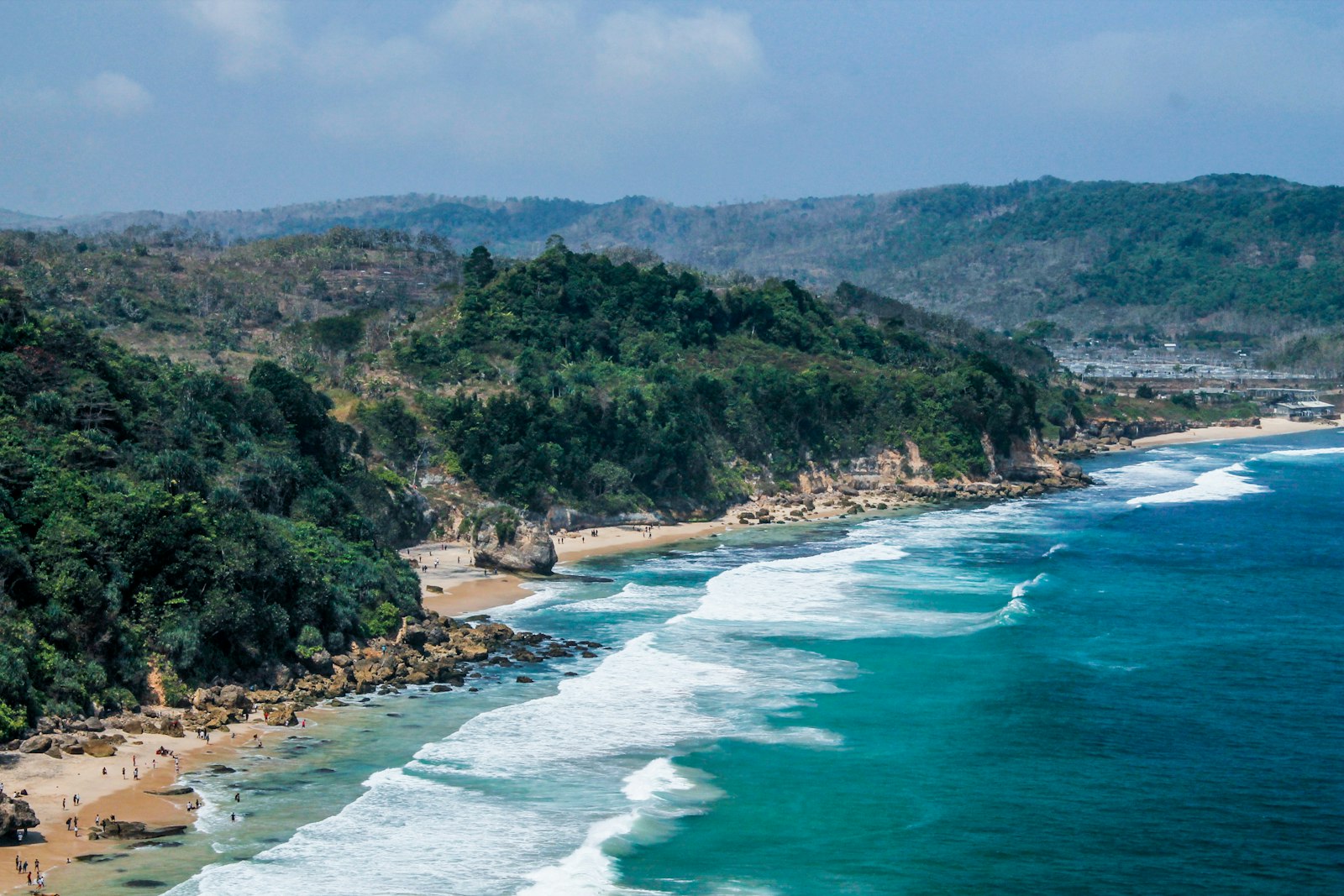
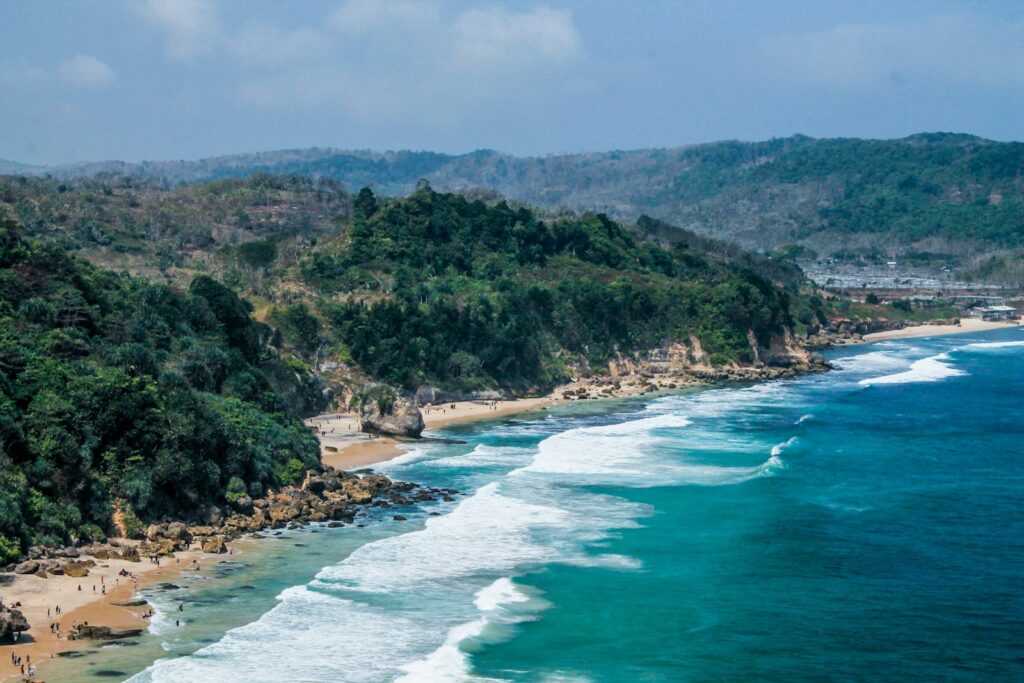
Sumba beachfront land is coastal and clifftop property on Sumba Island — the category most heavily marketed to foreign investors and the one that carries the highest concentration of legal, customary and practical risk. Listings describe oceanfront plots across West and East Sumba, with asking prices in 2026 clustered around IDR 22–24 million per are (100 m²) for West Sumba beachfront and clifftop parcels, while brokers advertise one-hectare oceanfront sites “from approximately USD 95,000.” Those are asking prices. There is no public transaction database for Sumba land, so no one can tell you what deals have actually closed at.
This guide is written from the ground level, not from a seller’s desk. The aim is to give you a working map of what beachfront and clifftop land for sale in Sumba actually involves — the pricing context, the coastal-specific legal layer, the infrastructure reality, and the adat and community risks that every broker’s brochure omits because brokers earn their fee when the deal closes, not when you avoid a bad one.
Pricing Context: What the Listings Show and What They Don’t
West Sumba beachfront and clifftop parcels have been marketed in 2026 at roughly IDR 22–24 million per are. One near-one-hectare oceanfront plot approximately 15 minutes from Tambolaka Airport has been listed at around IDR 22 million per are — translating to roughly IDR 2.2 billion for the hectare, or close to USD 130,000 at current rates. Brokers also advertise one-hectare oceanfront parcels starting from approximately USD 95,000, implying around USD 9.50 per square metre at the lower end of marketed supply.
For context against the benchmark market: West Uluwatu and Pererenan in Bali have been quoted at USD 400–800 per square metre for beachfront or near-beach land, occasionally higher in prime positions. On that comparison, Sumba’s marketed beachfront runs roughly three to five times cheaper per unit area than Bali’s top coastal tiers — a real differential, though a conservative one. Some broker materials claim ten to twenty times cheaper. That range cannot be verified from independent data and should be treated as a promotional estimate.
One figure in circulation — IDR 160–400 million per are for Sumba beachfront — is inconsistent with every live listing reviewed and should not be used. It appears to be a misprint or outlier that found its way into secondary commentary.
| Metric | Indicative Range / Figure | Notes |
|---|---|---|
| Price per are (100 m²) | IDR 22–24 million | West Sumba beachfront/clifftop listings, 2026. Asking price only. |
| One-hectare oceanfront entry | From ~USD 95,000 | Broker-marketed; one listed near-1-ha plot ~USD 130,000. No transaction data. |
| Bali hotspot beachfront (Uluwatu/Pererenan) | USD 400–800+/m² | Benchmark for comparison; Sumba ~3–5× cheaper on marketed asking. |
| Historical West Sumba beachfront (2014) | IDR 0.75–3.5 billion/ha | Pre-Nihi-era indicative range. Do not extrapolate as appreciation proof. |
| Erroneous figure — do not use | IDR 160–400 million/are | Inconsistent with all live listings; likely misprint. Exclude from analysis. |
The critical qualifier: every number in that table is drawn from listings, not from a settled registry of completed sales. Indonesia has no publicly searchable property transaction database equivalent to cadastral price records in Australia or the UK. When a broker tells you “land here has risen 1,200% since the resort opened” — a claim circulating in Sumba marketing material — ask for the baseline transaction, the terminal transaction and the independent appraiser’s report. You will not receive them, because they do not exist in any verifiable form. Attributed claims, never facts.
West Sumba vs East Sumba: Two Different Markets
Most of what is marketed internationally under “oceanfront plots Sumba island” refers to West Sumba. That distinction matters.
West Sumba
West Sumba is the locus of the island’s tourism-investment narrative. Tambolaka Airport (TMC) serves the regency — a roughly one-hour domestic flight from Denpasar — and the cluster of high-profile resort development sits southwest of there, toward the coast of Wanokaka and Kodi. Nihi Sumba, the ultra-luxury resort of 27 villas that transformed international awareness of the island after it was acquired and rebranded around 2012, operates in this zone. The so-called “Nihi Effect” — the narrative that flagship resort entry drives surrounding land appreciation — is real as a hypothesis and impossible to quantify as a law. What is true is that boutique resort projects, eco-lodges and land-banking plays have concentrated here, and that asking prices for beachfront parcels in West Sumba are higher than anything comparable in the east.
The coastline here is not monolithic. Some sections are wide sandy beaches accessible by a graded track off the main road. Others are clifftop positions with views down to surf breaks — clifftop land in West Sumba carries its own access and buildability questions distinct from flat beach parcels. Both categories appear in listings as “beachfront” or as clifftop land sumba west, so buyers need to be precise about what the parcel actually is: the engineering, drainage and structural requirements for a cliff build versus a beach-level site are fundamentally different, as are the sempadan (setback) interpretations applied.
East Sumba
East Sumba, accessed via Umbu Mehang Kunda Airport (WGP) at Waingapu, is an earlier-stage market. Land prices are lower, tourism infrastructure is thinner, and the investment case is correspondingly more speculative. East Sumba’s landscape tends toward drier savanna and long, exposed coastlines. Listing activity exists — there have been high-value quoted listings, including large beachfront resort parcels — but the secondary buyer pool is considerably smaller than West Sumba’s, and exit liquidity is correspondingly lower. If illiquidity is already one of the sector’s defining risks (it is), East Sumba compounds it.
The Coastal Setback Problem: What No Brochure Will Tell You
Indonesia’s law requires coastal setback zones — sempadan pantai — that restrict construction along the shoreline. But the specific metre distances are not set by national statute uniformly. They are determined provincially and locally, with local government instruments (Peraturan Daerah or RTRW provisions) taking precedence over general national guidelines.
One developer-produced FAQ document for Sumba asserts a tiered setback: 100 metres for permanent concrete structures, 30 metres for lighter structures, and 10 metres with protective measures. That figure should not be cited as law. It is a single-source, uncited developer claim. It may reflect the developer’s own interpretation of the local RTRW, or it may reflect what they wish the rules to be, or somewhere between.
The same document suggests Sumba lacks a “rigid zoning map.” That is inconsistent with the legal requirement for every Indonesian regency to produce and implement an RTRW (Rencana Tata Ruang Wilayah), which is a spatial planning document with legal force. If a developer tells you the zoning is flexible or undefined, the correct response is to request the current RTRW from Bappeda (the regional planning agency) and to check the parcel against it with BPN (the national land office). Not to proceed on the developer’s assurance.
Before any oceanfront or clifftop commitment, the setback question needs resolution from three agencies: Dinas PUPR (public works, for building-line determinations), Bappeda (for the current RTRW), and BPN (for the formal land certificate and any recorded encumbrances). Those agencies may give different answers. The one that restricts you the most is probably the one that will enforce.
Additionally, LP2B designations — Sustainable Food Agricultural Land under Law 41/2009 — protect certain land from conversion for non-agricultural development. Sumba regencies are included in NTT’s RTRW, which incorporates LP2B zones. No public polygon map has been confirmed for specific Sumba villages at the time of writing. A parcel that appears to be an open coastal field may sit within an LP2B boundary that prevents any villa or resort construction. BPN and the local land office can advise; a brochure cannot.
Access: Tracks, Roads and the Reality of Getting There
Sumba’s main spine road — connecting Waingapu in the east through Waikabubak to Waitabula and Tambolaka in the northwest — is generally paved. Most beachfront and clifftop parcels are not on that spine. They are accessed by graded tracks of varying quality, sometimes seasonal, sometimes requiring 4WD for part of the year.
The distance from Tambolaka to resort areas in West Sumba is approximately two hours by road, partly on the spine and partly on coastal tracks. That two-hour figure is cited from sources referencing the northern airport — it is not a firm number and varies by exact destination and road condition at the time. New road construction has been underway in parts of West Sumba as tourism investment increases, but individual parcel access is site-specific. A listing may describe a plot as “20 minutes from Tambolaka” meaning 20 minutes on a dry-season graded track that becomes impractical in the wet.
If you are considering beachfront land for sale in Sumba with any development intent, access must be physically surveyed — ideally in both dry and wet season — before the commitment is made. The cost of constructing or improving a road to a remote coastal parcel is not trivial and is rarely factored into asking prices or developer pro-formas.
Water and Electricity: Self-Provided Infrastructure
There is no reliable piped water supply to remote coastal parcels on Sumba. Investors who develop beachfront sites self-provide: wells, boreholes, water storage and treatment. The quality and depth of the water table varies by location. Bore drilling costs and pump infrastructure need to be budgeted as a capital line, not an afterthought. High-end projects on the island plan for water storage capacity that can bridge dry-season variation.
Electricity is available via PLN grid in most towns and many villages, and Sumba has been part of Indonesia’s Iconic Island renewable energy pilot programme. But coverage in remote coastal zones is uneven and reliability can be intermittent. Serious development projects plan hybrid solar, battery and generator backup. That adds to the all-in capital cost. Build cost on a remote Sumba coastal site is generally estimated to run 10–30% higher than an equivalent project in Bali, partly because of logistics premiums on materials, partly because of these self-provided infrastructure requirements. No published Sumba-specific construction-cost survey exists; treat any per-square-metre figure as a starting estimate requiring a site-specific bill of quantities.
Adat, Kabisu and Customary Title: The Risk Every Listing Skips
This is the section that competing sites don’t write, because most of them are selling the land.
Sumba’s social organisation is structured around the kabisu — the patrilineal clan. Land in customary Sumba tenure is not individually owned in the Western sense; it belongs to the clan collectively, administered through clan elders and the village head (kepala desa). The Marapu belief system, the animist spiritual tradition still widely practiced across Sumba, is embedded in the land: ancestral graves, ritual sites and sacred forest boundaries are features of customary land that may not appear on any BPN registry document.
The Indonesian state land registry — Hak Milik certificates, Hak Guna Bangunan, and the various rights issued by BPN — exists alongside this customary system, sometimes tracking it accurately and sometimes diverging sharply. In rural Sumba, customary rights often predate formal titling, and formal title may have been issued without adequate clan consent, or may cover land that is simultaneously claimed under adat. Multiple certificates for the same plot are a known problem in Indonesia’s rural land system, and the governance quality in Nusa Tenggara Timur (NTT) provinces historically lags the national average.
What Can Go Wrong
A vendor presents a Hak Milik certificate that appears clean on a BPN extract. The PPAT verifies the name, the encumbrances look clear, and the boundaries appear on the certificate. The buyer proceeds.
What the BPN extract does not show: whether the original titling was consented to by the wider kabisu, whether a competing certificate exists on an older registry, whether a village elder contests the sale, and whether the land sits adjacent to a sacred site that would make development a community flashpoint even if it is legally permissible. None of these questions appear in a standard land-certificate search. They require separate customary diligence — conversations with the kepala desa, with kabisu elders, and ideally with an anthropologist or local legal practitioner who understands the intersection of adat and formal title on Sumba specifically.
Documented Coastal Conflict: Marosi Beach
Marosi Beach, on the West Sumba coast, has been the subject of a documented land conflict between local adat communities and investor interests — widely reported in Indonesian media and NGO literature. The conflict involved protests, community opposition and police presence. This is mentioned not as a comprehensive account (readers should pull primary sources directly by searching Indonesian-language media for “sengketa tanah Pantai Marosi Sumba Barat”) but as evidence that coastal-land disputes on West Sumba beaches are not hypothetical. They have happened. The specific facts are best read from primary sources rather than summarised at second hand.
The pattern these conflicts follow is consistent with the structural risk: land in a customary system where clan consent is diffuse, where certificates may have been obtained without full community process, where investors arrive with capital that local communities have not been adequately compensated for — and where the coastal location makes the land both highly visible and emotionally significant to local identity. The fact that a plot has a certificate does not mean the community accepts the transaction.
What Adequate Adat Diligence Looks Like
At minimum, before acquiring any beachfront land for sale in Sumba, a buyer should:
- Confirm the title chain at BPN — not just the current certificate, but the history of how the land was first titled from ulayat (communal customary) land.
- Meet with the kepala desa and document that meeting. If the kepala desa is reluctant to appear, that is a data point.
- Request a statement (or notarially recorded acknowledgment) from relevant kabisu elders that the customary rights in the land have been resolved.
- Check for any known adat graves, ritual posts or customary boundaries on or near the parcel.
- Engage a local Indonesian counsel with NTT practice experience, not just a Bali-based property lawyer who has not worked in Sumba.
None of this guarantees resolution. It reduces the probability of discovering the problem after money has changed hands.
Foreign Ownership: Leasehold, Not Freehold
Hak Milik — freehold — is reserved for Indonesian citizens and certain Indonesian legal and religious entities. Foreigners cannot hold it. Any transfer of Hak Milik to a foreigner is legally void under the Basic Agrarian Law (UUPA No. 5/1960). That is not a technicality or a grey area; it is a hard rule that Indonesia has consistently applied.
The practical routes for foreign involvement in Sumba land are:
- Hak Sewa (Leasehold)
- A contractual lease, not a registered land right. The most common structure for foreigners in Sumba. Terms in practice run 25–30 years with contractual extension options that can push total duration toward 70–80 years. The extension is contractual, not automatic — it depends on the landlord being alive, solvent and cooperative at renewal time. The land ownership remains with the Indonesian lessor throughout. Nearly all Sumba listings aimed at foreign buyers are presented on this basis.
- Hak Pakai (Right to Use)
- Available to foreigners residing in Indonesia with valid KITAS/KITAP, and to PT PMAs. Under current regulations (GR 103/2015 and subsequent ATR/BPN rules), total duration can reach up to 80 years across initial term and extensions. Restricted to residential use, not pure investment. Exact current terms are regulation-dependent — verify with a licensed PPAT or notary under current ATR/BPN circulars, not from a brochure.
- PT PMA holding Hak Guna Bangunan (HGB)
- A foreign-invested Indonesian company (PT PMA) is explicitly eligible to hold HGB, which is a more durable registered right than a private lease for development purposes. Terms are also regulation-dependent (often cited as 30+20+30 years post-Omnibus). The PT PMA structure carries its own requirements: a minimum investment plan commonly quoted at around IDR 10 billion per business line (excluding land and buildings), ongoing BKPM/OSS compliance, and a board and shareholding structure. Verify current thresholds with an Indonesian investment law firm.
Nominee arrangements — putting Hak Milik in an Indonesian citizen’s name for the benefit of a foreigner — are illegal under Article 26(2) of the BAL. Side agreements purporting to give foreigners control or economic benefit over nominally Indonesian-held land are void and unenforceable. A foreigner in a nominee structure has no court remedy if the Indonesian nominee asserts their own rights or is pressured by family, creditors or regulators. This risk is amplified in Sumba’s customary-land context, where the nominee may face clan-level counterclaims over the land as well.
Appreciation Claims: Speculative, Not Supported by Data
The Sumba investment narrative runs on the word “potential.” Land values described as having risen dramatically since Nihi opened, demand described as growing at double-digit annual rates, ROI projections in the mid-to-high teens. Every one of those claims originates with a seller and none can be verified from independent transaction data.
The “next Bali” description — persistent in listings and broker emails — is a marketing slogan. Official Indonesian government planning documents characterise Sumba as a semi-arid, agriculture-focused island. Tourism is growing from a low base and concentrated near flagship resort clusters. The island has no international flights; it requires a domestic transfer via Bali or Kupang. The secondary buyer pool for standalone investment villas is thin. The exit process — finding a buyer, completing a lease assignment, repatriating funds — takes time in a market where your counterparty pool is small by definition.
None of this means Sumba beachfront land is a bad investment. It means it is a speculative one, with a long time horizon and exit uncertainty that the listings don’t model. Capitalising on scarcity requires that future buyers agree the scarcity is real and worth paying for. That is a bet on market development, not a calculation on existing data.
No rental yield figure is promised or implied by this guide. Sumba’s tourism volume is far earlier-stage and lower-density than Bali or Lombok. Real demand for standalone villas outside established resort clusters is thin. No reliable occupancy or yield data for Sumba villas exists in any public source. Anyone presenting Sumba villa yield figures as fact — rather than as developer projections with stated assumptions — is working from air.
Tax Layer: What You Pay, When
The tax obligations on a Sumba land acquisition are:
- BPHTB (acquisition duty, buyer): 5% of the transaction value above the regional non-taxable threshold (NPOPTKP, set locally at a minimum of IDR 60 million). Must be paid before the PPAT will execute the deed of sale (AJB). Non-payment means the transfer cannot be registered.
- PPh Final (income tax on sale, seller): 2.5% of gross transaction value under PP 34/2016. Normally the seller’s obligation, but buyers should confirm it has been paid — an unpaid seller tax can complicate title transfer.
- PBB (annual property tax): NJOP-based, roughly 0.1–0.2% of assessed value in effective terms for most parcels. Now a regional tax and locally variable; treat as illustrative.
- Rental income tax (if renting out): Practitioner sources cite 10% for residents and 20% for non-residents, but no clear national statute citation exists for these rates; they may derive from general withholding tax rules on Indonesia-sourced income. Confirm with a local tax advisor before modelling any rental returns.
Notary and PPAT fees, boundary survey costs, and the legal fees for due diligence add further to acquisition costs. Budget for these explicitly rather than absorbing them into the headline land price.
The Verify-First Protocol
A checklist for any beachfront land for sale in Sumba or oceanfront plots on Sumba island, before capital is committed:
- Title check at BPN. Request the physical and juridical data extract (informasi data fisik dan yuridis) for the specific certificate. Confirm ownership, boundaries and any recorded encumbrances. Confirm no duplicate certificates exist for adjacent boundaries.
- RTRW zoning check. Obtain the current Rencana Tata Ruang Wilayah for the relevant regency from Bappeda. Confirm the parcel is not LP2B-designated, not in a protected coastal or forest zone, and that the intended use is compatible with the RTRW designation.
- Sempadan pantai confirmation. Ask Dinas PUPR in the regency for the local coastal-setback rules applicable to the parcel. Do not accept a developer’s own figure. Request the written regulation.
- Customary title diligence. Meet the kepala desa. Ask about kabisu claims on the land. Document the conversation. Have NTT-experienced counsel assess the adat risk independently.
- Physical access survey. Walk the parcel and assess road conditions in the relevant season. Confirm water access (well depth, quality, reliability). Confirm electricity connection or grid distance.
- Independent boundary survey. Commission a licensed surveyor to verify that the physical parcel matches the certificate boundary. Discrepancies are common in rural Indonesia.
- Engage a licensed notary and PPAT. Select one registered in Nusa Tenggara Timur, with Sumba experience. Do not use a notary recommended solely by the seller.
This list is a starting framework, not a substitute for independent professional advice. The risks on Sumba beachfront specifically — adat title, customary conflict, coastal zoning, infrastructure self-provision — are concentrated enough that cutting corners on any of these steps has consequences that are difficult to reverse after the AJB is signed.
Frequently Asked Questions
What is the typical price for beachfront land for sale in Sumba right now?
West Sumba beachfront and clifftop parcels have been listed in 2026 at around IDR 22–24 million per are (100 m²), with one-hectare oceanfront plots marketed from approximately USD 95,000. These are asking prices from listings, not completed transaction data. No public transaction register exists for Sumba land, so actual sale prices are unknown. One figure in circulation — IDR 160–400 million per are — is inconsistent with all live listings and should not be used as a benchmark.
Can a foreigner buy beachfront land on Sumba directly?
No. Foreigners cannot hold Hak Milik (freehold). The available structures are leasehold (Hak Sewa) under a private contract — common in Sumba listings, typically 25–30 years with contractual extensions — Hak Pakai for qualifying foreign residents, or land held through a PT PMA foreign-invested company. Nominee arrangements (freehold in an Indonesian’s name for a foreigner’s benefit) are illegal under the Basic Agrarian Law and void under Article 26(2). Consult a licensed Indonesian notary and PPAT before structuring any acquisition.
What is the coastal setback rule for building on Sumba beachfront?
Indonesia requires coastal setback zones (sempadan pantai), but exact distances are set locally by provincial and regency regulations, not uniformly by national statute. One developer document for Sumba cites 100 metres for permanent concrete, 30 metres for lighter structures, and 10 metres with protective measures — but this is a single-source, uncited developer claim, not a verified legal instrument. You must confirm the applicable setback directly with Dinas PUPR, Bappeda and BPN in the relevant regency. Do not rely on a brochure figure.
What is the adat or customary-land risk on Sumba beachfront specifically?
Sumba land is organised through kabisu (patrilineal clans) under the Marapu cultural system. Customary rights may not be fully reflected in BPN formal title. Certificates have been issued in some cases without adequate clan-elder consent or over land with competing customary claims. Documented community-investor land conflicts have occurred on West Sumba beaches — Marosi Beach is one well-reported case — and buyers should search Indonesian-language media and NGO sources for primary accounts before relying on this summary. Adat diligence requires conversations with the kepala desa and kabisu elders, not just a BPN certificate extract. This is Sumba-specific risk that Bali-templated property guides do not cover.
Is Sumba beachfront land a good rental investment?
No public occupancy or rental yield data exists for Sumba villas. Sumba’s tourism base is significantly earlier-stage and lower-density than Bali or Lombok. Demand for standalone villa rentals outside established flagship resort clusters is thin and not consistently documented. Any ROI or yield figure presented by a Sumba developer or broker is a projection with unstated assumptions, not a realised return. The more honest characterisation of Sumba beachfront land is as a speculative long-horizon capital position — and an illiquid one, with a small secondary-buyer pool and no certainty of appreciable exit at any particular timeline. No yield is promised here and none should be accepted without independent modelling grounded in verifiable data.
Before You Proceed
Sumba beachfront land sits at the intersection of some of Indonesia’s most complex investment risk layers: customary title, coastal regulation, infrastructure self-provision, an illiquid secondary market, and a foreign-ownership legal framework that requires careful structural planning. The asking prices are real. So are the risks.
The mandate before any capital commitment is unchanged: engage a licensed Indonesian notary (Notaris) and PPAT registered in Nusa Tenggara Timur, independent of the seller; conduct BPN certificate verification; confirm zoning with Bappeda and setback rules with Dinas PUPR; and complete adat diligence with local counsel who has Sumba-specific practice experience. None of those steps can be delegated to the broker marketing the parcel.
If you want to talk through a specific site or structure a diligence framework, reach us through our enquiry form or on WhatsApp at +62 811-3941-4563. Our guidance is free. No one can pay to change what we publish; if you proceed with a partner through our referral, they may pay us a fee at no extra cost to you.