How to read this: Sumba Villa Investment is an independent investment-intelligence guide — we research, compare and explain Sumba land and villa opportunities, then route serious enquiries to a vetted partner. We are not a broker, developer, financial adviser, notary or law firm, and this is general information, not investment, tax or legal advice. Foreigners cannot own freehold (Hak Milik) land in Indonesia, and nominee arrangements are risky and may be unlawful — never rely on them. Figures here are indicative ranges and can change; we never promise returns. Always do your own due diligence and verify everything with a licensed Indonesian notary (PPAT) and qualified counsel before you commit.
West vs East Sumba investment is a comparison between two administratively separate regencies on the same island that operate, at this stage of their development, as almost entirely different markets. West Sumba — served by Tambolaka Airport (TMC) and carrying the narrative halo of Nihi Sumba resort — is where most international land-marketing activity is concentrated, where asking prices are highest, and where the distance between hype and verified fact is widest. East Sumba, accessed through Umbu Mehang Kunda Airport (WGP) at Waingapu, is an earlier-stage, cheaper, and considerably thinner market, with a longer development horizon and a smaller pool of buyers at any given moment. The correct question for any investor is not which side is “better” but which side aligns with their access needs, title-security situation, timeline, and intended use. Neither side offers any guarantee of appreciation or rental return.
This comparison is written by someone who knows the island, not someone selling a piece of it. The aim is to map what is verifiably true about each region, name the claims that cannot be independently supported, and give investors a working framework for asking the right questions before they commit capital.
The Two Airports: What Access Actually Means
Most international commentary about investing in Sumba treats the island as a single market. It is not. The island spans roughly 11,000 square kilometres, and the main paved spine — Waingapu to Waitabula to Tambolaka — is a several-hour drive. The two airports are not interchangeable transit points for the same destination.
Tambolaka (TMC) and West Sumba
Tambolaka Airport serves West Sumba and is the entry point for virtually all of the resort-tourist and investor traffic that the island now attracts. It is accessible by domestic flight from Denpasar (Bali) in roughly one hour, with connections also available via Kupang. There are no international flights into Sumba from anywhere, a fact that matters considerably when modelling the tourist catchment for any villa rental business.
From Tambolaka, the drive to the resort and surf zones of Wanokaka and the coast around Nihi Sumba takes approximately two hours. That figure comes from sources referencing the northern approach; exact travel time varies by destination and road condition. It is not a quick taxi hop. Some marketed parcels “15 minutes from Tambolaka” are 15 minutes on a dry-season graded track. In the wet season, road conditions on laterite tracks can change that number substantially. Physical access needs to be surveyed, not assumed from the listing copy.
Waingapu (WGP) and East Sumba
Umbu Mehang Kunda Airport at Waingapu serves East Sumba. It also operates domestic flights, though with less frequency and fewer direct connections than Tambolaka. Waingapu is the administrative and commercial centre of East Sumba regency — a functional town with the services you would expect, but not a tourism hub in any meaningful sense at present. East Sumba coastal land in the immediate Waingapu area exists and is listed, occasionally at headline figures that reflect the scale of oceanfront parcels rather than per-unit market pricing comparable to the west. That distinction matters: a large-area listing at a headline euro or dollar figure is not proof of a liquid mid-size market.
The main paved spine connecting Waingapu to Waitabula and then to Tambolaka is generally driveable and provides a logical link between the two regions. But the spine is not the coastline. Most of the beachfront and clifftop parcels being marketed in either region are accessed off the spine on tracks that vary from graded laterite to rough rural roads. The further from the spine — and on Sumba, the coastal parcels of interest often are — the more access becomes a site-specific engineering and budget question rather than a given.
West Sumba: The Premium Narrative Zone
West Sumba carries the investment narrative for the island, and the Nihi Effect is the engine of that narrative. Understanding what Nihi Sumba actually is, and what it does and does not prove, is essential groundwork.
Nihi Sumba and the Demonstration Effect
Nihi Sumba — originally Nihiwatu, founded as a surf resort in 1988 by Claude and Petra Graves, acquired and rebranded around 2012 by Christopher Burch and James McBride — operates 27 villas on approximately 567 acres in West Sumba. It has been repeatedly ranked among the world’s best hotels by international travel media. The resort has a well-regarded charitable arm, the Sumba Foundation, working in health, water and education for surrounding communities.
The demonstration effect attributed to Nihi is qualitatively real: a flagship ultra-luxury property with international profile raised the island’s visibility and made it a recognisable name to the category of traveller who spends at that tier. Boutique resorts, eco-lodges and surf camps have followed in West Sumba. Land-banking interest has concentrated near the Wanokaka coast and further south toward Kodi. Asking prices for beachfront and clifftop parcels in West Sumba run higher than anything comparable in the east — West Sumba beachfront has been listed in 2026 at around IDR 22–24 million per are (100 m²), with one-hectare oceanfront parcels marketed from approximately USD 95,000.
What the Nihi Effect does not prove: that surrounding land will appreciate in any predictable way, on any particular timeline, or at all. The jump from “a world-class resort operates nearby” to “my raw beachfront plot will triple in value” requires a chain of logic that depends on tourism infrastructure scaling, access improving, and a deep enough secondary buyer pool materialising — none of which can be read from Nihi’s star ratings.
Broker claims of land-value increases in the range of 1,200% since the resort opened are marketing claims. They have no verifiable baseline transaction, no verifiable terminal transaction, and no independent appraiser behind them. Indonesia has no publicly searchable property transaction database. Attributed claims, not facts.
West Sumba Property Hotspots: Kodi, Pero and the Surf Land
The west sumba property hotspots most frequently mentioned in listing activity are Wanokaka (the direct Nihi adjacency zone), Kodi and Pero. Kodi and Pero carry surf-land appeal — consistent southwest swell access during the dry season has attracted the wave-focused hospitality segment, which operates in a distinct price tier from the ultra-luxury end. Surf-camp and eco-lodge economics run differently from five-star villa economics, and the land values in the Kodi and Pero areas reflect that: generally lower than the Wanokaka premium position, though still within the West Sumba price register rather than the East Sumba one.
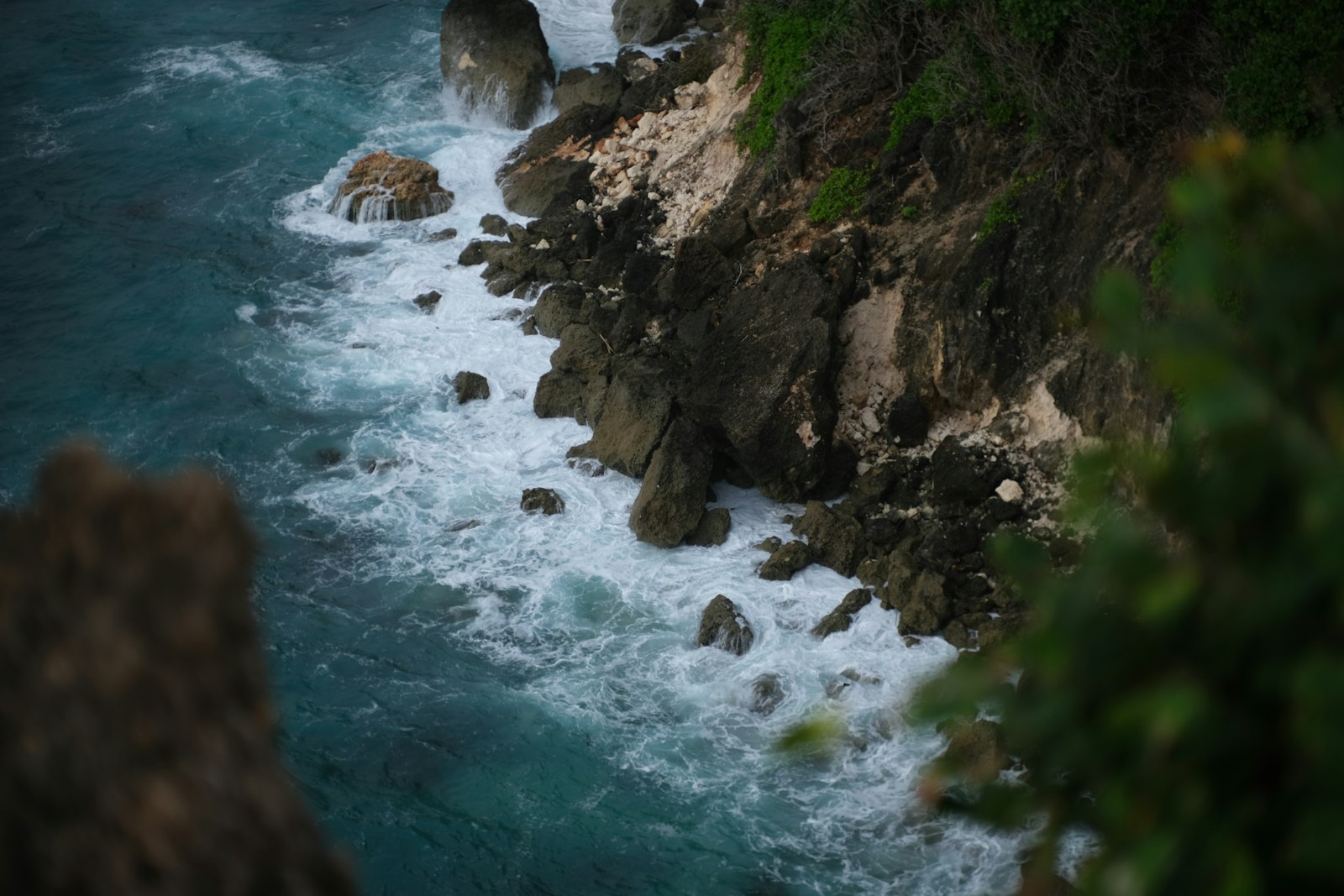
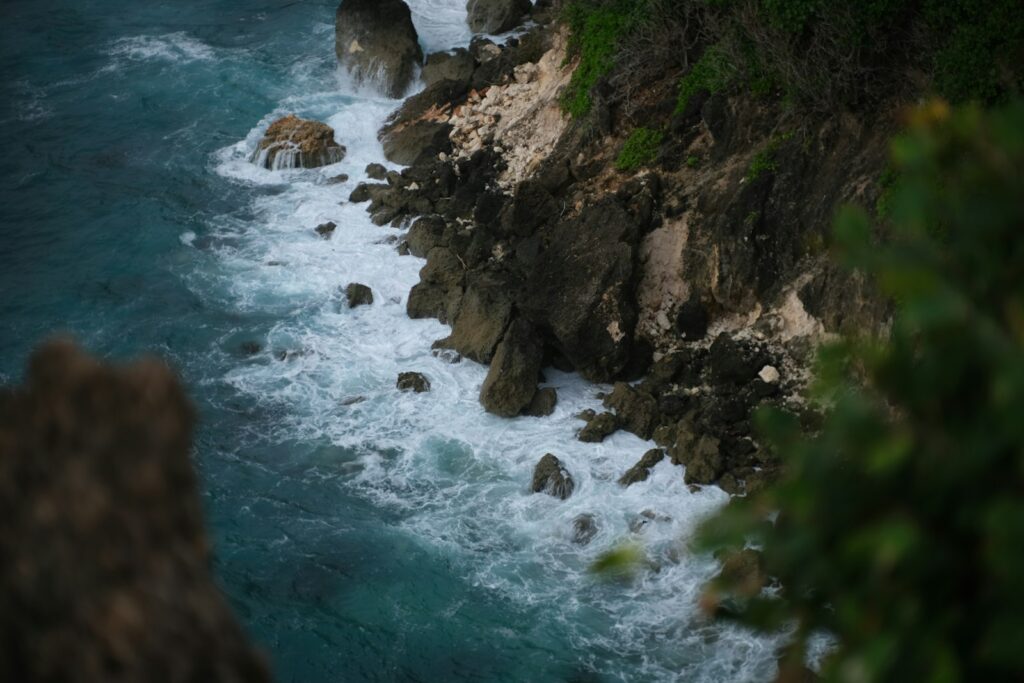
The coastline in West Sumba is not uniform. Wide sandy beach parcels exist alongside dramatic clifftop positions with views down to breaking surf. Both categories appear in listings as “beachfront,” which is imprecise. A cliff-edge parcel and a beach-level parcel involve fundamentally different structural requirements, different drainage conditions, different sempadan (coastal setback) interpretations, and different practicalities for guests arriving by foot. Buyers need to know what they are acquiring before the geometry of the title certificate tells the full story.
Pricing: Highest Asking, Highest Hype to Discount
West Sumba carries the island’s highest asking prices, and also the island’s heaviest concentration of promotional material to cut through. The honest comparison against Bali: West Sumba beachfront at IDR 22–24 million per are against Bali hotspot (Uluwatu, Pererenan) beachfront at USD 400–800 per square metre or more. On marketed asking prices, that is a real differential — conservatively three to five times cheaper per unit area. Some broker materials describe ten to twenty times cheaper. That range cannot be independently verified and should be treated as a promotional estimate, not a market data point.
Every price in the preceding paragraph is a listing price. There is no transaction database. What you see is what sellers believe they can achieve, or at least what they are prepared to open at. What actually clears, on what timeline, with what structure, is not recorded anywhere accessible to an outside buyer.
| Factor | West Sumba | East Sumba |
|---|---|---|
| Primary airport | Tambolaka (TMC) | Waingapu / Umbu Mehang Kunda (WGP) |
| Indicative beachfront asking price | ~IDR 22–24 million/are (listed 2026) | Lower; thin listing activity, no reliable benchmark |
| Tourism infrastructure | Boutique resorts, surf camps, growing | Minimal; Waingapu is commercial, not tourist hub |
| Flagship resort halo | Nihi Sumba (Wanokaka) — real but unquantified | None comparable |
| Secondary buyer pool | Small; larger than east | Very thin; exit liquidity lower |
| Development stage | Early-emerging with established anchors | Earlier-stage; more speculative |
| Adat/customary risk | Present; documented conflicts on coastal land | Present; less documented, not lower risk |
| Water and electricity (remote coastal) | Self-provided in remote areas | Self-provided in remote areas |
| Access to coastal parcels | Often graded tracks; site-specific | Often graded tracks; site-specific |
East Sumba: Earlier Stage, Lower Price, Thinner Demand
East Sumba waingapu real estate is a category that attracts a different kind of speculative buyer: one prepared to accept a longer and more uncertain development horizon in exchange for lower entry prices. That trade-off is real. The risks are also real, and they do not scale down proportionally with the price.
What East Sumba Actually Offers
East Sumba’s landscape is generally drier and more savanna-like than the west. Waingapu, the regency capital, is a functioning town of meaningful scale — it has services, a hospital, markets and government offices. But the tourism infrastructure that drives villa demand simply does not exist in East Sumba in a form comparable to what the Wanokaka coast offers. There are no equivalent flagship resort anchors in the east at the time of writing. International travel writers have not converged on an East Sumba location in the way they have on West Sumba.
Large beachfront parcel listings have appeared for East Sumba — including, in the international property aggregators, resort-scale coastal parcels at headline figures that reflect acreage rather than per-unit demand. High headline prices on large parcels are not the same as a functioning market at those prices. The secondary buyer pool — the people who would buy a developed East Sumba villa from an exiting investor five or ten years hence — is smaller than the already-thin West Sumba pool. If illiquidity is the central risk of Sumba investment (and it is), East Sumba compounds it.
The ‘Fastest-Developing’ Claim
Marketing for East Sumba land frequently employs the phrase “fastest-developing” or equivalent growth-narrative language. There is no named government infrastructure project with a confirmed budget and delivery date that independently supports that characterisation for the east coast specifically. The main paved spine is a genuine asset for the island, and tourism growth across Sumba has been attributed in part to improved domestic air access and better roads — but no specific recent airport-upgrade project name, no confirmed road-development budget, no committed timeline can be produced from verifiable sources for East Sumba coastal areas. “Fastest-developing” is a slogan. Location choice based on that slogan rather than on verified access, confirmed title and planned use is a speculative bet on a narrative, not on infrastructure.
What Both Regions Share: Risks That Don’t Respect the Regency Line
The East-West distinction matters for pricing, for tourism context, and for secondary-market depth. It does not reduce the structural risks that apply across Sumba regardless of which side of the island you are looking at.
Adat Land and Kabisu Clan Rights
Sumba’s social structure organises land through the kabisu — the patrilineal clan. Land in customary Sumba tenure is not held individually in the Western sense; it belongs collectively to the clan, with administration through clan elders and the village head (kepala desa). The Marapu animist tradition, which remains widely practised across both West and East Sumba, embeds sacred sites, ancestral graves and ritual boundaries in the landscape in ways that do not appear on any BPN registry extract.
The Indonesian formal land registry — Hak Milik certificates, Hak Guna Bangunan, and the various rights issued by BPN — exists alongside this customary system. In rural Sumba, the two sometimes track each other accurately and sometimes diverge sharply. A certificate can be formally clean on a BPN extract while the underlying adat community contests the validity of the original titling process. Multiple certificates for the same plot are a known systemic problem in rural Indonesia, and the governance and mapping quality in Nusa Tenggara Timur (NTT) provincially has historically lagged the national average.
The Marosi Beach conflict in West Sumba — a documented dispute between local adat communities and investor interests, widely reported in Indonesian media and NGO literature, involving protests, community opposition and police presence — is mentioned here not as a comprehensive account but as evidence that coastal-land disputes on West Sumba beaches are not hypothetical. They have happened. Readers seeking primary accounts should search Indonesian-language media and NGO sources directly for “sengketa tanah Pantai Marosi Sumba Barat.”
East Sumba has less documented conflict history — partly because it has less documented investment activity. That is not the same as lower risk. A less-visible market means less scrutiny, not cleaner title chains. Adat diligence is mandatory on both sides: conversations with the kepala desa, engagement with kabisu elders, confirmation that the customary rights in a parcel have been resolved through a process the community accepts, not just a process a seller claims happened. This requires local counsel with NTT practice experience, not a Bali-based property lawyer who has never worked in Sumba.
Water, Electricity and the Infrastructure Reality
These are not West Sumba problems or East Sumba problems. They are Sumba problems, active in any remote coastal area on the island regardless of which regency the parcel falls in.
There is no reliable piped water supply to remote coastal parcels on Sumba. Investors who develop any site self-provide: wells, boreholes, storage tanks and treatment systems. Bore depth, water quality and dry-season yield vary by location and are not predictable from a title certificate. Water infrastructure is a capital line, not an assumption.
Electricity via PLN grid reaches most towns and many villages, and Sumba has been part of Indonesia’s Iconic Island renewable-energy pilot. But remote coastal coverage is uneven and reliability is an active issue. Serious development projects on both sides of the island plan hybrid solar, battery and generator backup. Build cost in remote Sumba is therefore generally estimated to run 10–30% higher than an equivalent Bali project, driven partly by materials-logistics premiums and partly by these self-provided infrastructure requirements. No published island-wide Sumba construction-cost survey exists; treat any per-square-metre figure as a starting estimate requiring a site-specific bill of quantities, not as a locked assumption.
Foreign Ownership: The Same Legal Framework on Both Sides
The Indonesian land-law framework applies uniformly. Foreigners cannot hold Hak Milik (freehold) anywhere in Indonesia, including Sumba. The practical routes are leasehold (Hak Sewa, a contractual lease, most common in Sumba listings, typically marketed at 25–30 years with contractual extension options); Hak Pakai for foreign residents on qualifying KITAS or KITAP, with terms under current regulations potentially extending to 80 years in total across extensions; and land held through a PT PMA (foreign-invested Indonesian company) via Hak Guna Bangunan, which carries its own compliance and capital requirements — minimum investment plan commonly quoted at around IDR 10 billion per business line, though this is BKPM/OSS policy subject to change and should be verified with an Indonesian investment law firm.
Nominee structures — Hak Milik in an Indonesian citizen’s name for a foreigner’s benefit — are illegal under Article 26(2) of the Basic Agrarian Law and unenforceable. A foreigner in a nominee arrangement has no court remedy if the Indonesian nominee asserts their own rights. That risk is amplified in Sumba’s customary-land context, where the nominee may face kabisu-level counterclaims over the same land.
For a deeper treatment of foreign ownership structures, see our foreign ownership structures page. For the full picture of Sumba beachfront land specifics, including coastal-setback rules and the LP2B agricultural-land protection zones, see our beachfront land page.
Choosing a Region: Access, Title, Use — Not Slogans
The best area to invest in Sumba is not a universal answer. It is the answer that follows from three honest questions.
Where is your access? If your intended guests or tenants are flying in from Bali and you are planning a hospitality or short-let product, Tambolaka and West Sumba are the only realistic options at present. East Sumba requires an additional flight segment, lower-frequency connections, and a significantly longer ground transfer for any coastal parcel of interest. That does not make East Sumba unbuildable, but it does make any rental-demand model for it considerably more speculative.
How clean is the title? This is not a regional question — it is a parcel question. A West Sumba beachfront parcel with an adat dispute is worse than an East Sumba inland parcel with clean title and a resolved customary history. Do not let regional narrative substitute for parcel-level diligence. The steps are: BPN land-office extract confirming the title chain, RTRW zoning check with Bappeda, coastal-setback confirmation with Dinas PUPR, independent boundary survey, and customary diligence with the kepala desa and kabisu elders, documented and assessed by NTT-experienced counsel.
What is the parcel actually for? Raw land held as a long-horizon speculative position has a different logic from a parcel on which you intend to build within two years. Speculative land-banking in an illiquid, unquantified market with a small secondary buyer pool requires a long time horizon, capital you do not need back on any particular schedule, and tolerance for exit uncertainty. A development project requires, additionally, confirmed access, water, electricity and a construction-cost budget with credible contingency for Sumba’s logistics premium. Neither West nor East Sumba is the wrong answer for every investor. Both are the wrong answer for anyone expecting Bali-level liquidity, Bali-level tourism density, or near-term guaranteed returns.
On the ‘Next Bali’ Framing
The phrase appears in nearly every Sumba property communication. It needs a direct response.
Sumba is not Bali. Official Indonesian government planning documents characterise Sumba as a semi-arid island with an agriculture-focused economic base. Tourism is growing from a low base and is concentrated near flagship resort clusters in West Sumba. The island has no international flights. It requires a domestic transfer via Bali or Kupang. Its tourism density — the number of visitors, nights stayed, and daily spend per visitor — is a fraction of Bali’s, and there is no credible timeline in any government planning document reviewed for that gap closing in a horizon that most property investors would consider short-to-medium term.
That does not mean Sumba lacks a real investment case. It means the investment case is a speculative frontier position, priced accordingly (lower than Bali), with commensurately higher uncertainty on returns, exit timing, and the level of tourism infrastructure that will exist around your asset in ten years. Anyone presenting Sumba as a safe or predictable investment is either selling something or has not done the work.
No rental yield figure is stated here because no public occupancy or yield data for Sumba villas exists in any source. Any yield figure presented by a developer or broker is a projection with assumed inputs, not a realised return. The market is risk-skewed toward speculative long-horizon capital appreciation, not stable rental income, and that characterisation applies to West Sumba more than East Sumba simply because West Sumba has marginally more tourism infrastructure to anchor a rental model — marginally, not dramatically.
Before You Choose a Side
The diligence protocol is the same regardless of which regency you are looking at. Before any capital is committed on either side of Sumba:
- Title check at BPN. Physical and juridical data extract for the specific certificate. Confirm ownership chain, boundaries, encumbrances, and the absence of competing certificates on the same land or overlapping boundaries.
- RTRW zoning check. Current spatial plan from Bappeda for the relevant regency. Confirm the parcel is not LP2B-designated (protected agricultural land), not in a coastal or forest protection zone, and that the intended use is compatible with RTRW designation.
- Sempadan pantai confirmation. Written coastal-setback rules from Dinas PUPR. Do not accept any developer’s claimed metre figure; the applicable rule is set locally and must come from the agency with authority to enforce it.
- Customary diligence. Meet the kepala desa. Document the meeting. Engage NTT-experienced counsel to assess kabisu claims on the land independently of the seller.
- Physical access survey. Walk the parcel and assess the track in the relevant season. Measure the realistic dry-season and wet-season access condition. Budget road improvement as a capital line if required.
- Independent boundary survey. Commission a licensed surveyor. Certificate boundaries and physical parcels do not always match in rural Indonesia.
- Licensed notary and PPAT. Registered in Nusa Tenggara Timur, independent of the seller, with Sumba practice experience if available. The PPAT executes the deed of sale (AJB) and registers the transfer with BPN; BPHTB acquisition duty (5% of value above the regional threshold) must be paid before the deed can be signed.
This is a framework, not a substitute for advice from licensed Indonesian counsel. The complexities on Sumba — adat title, coastal regulation, infrastructure self-provision, a foreign-ownership framework that requires structural planning, and an illiquid secondary market — make independent professional review non-optional, regardless of which side of the island the parcel is on.
Frequently Asked Questions
Is West Sumba or East Sumba better for property investment?
There is no universal answer. West Sumba carries higher asking prices, more developed tourism infrastructure, and the Nihi Sumba halo effect, making it the more active market with a slightly larger secondary buyer pool. East Sumba has lower entry prices but considerably thinner tourism demand, less listing activity, and a smaller pool of buyers at exit. For any investor with a hospitality or short-let intent, West Sumba via Tambolaka Airport is the only realistic option at present given flight connectivity. For pure land-banking with a very long horizon and no near-term development plan, East Sumba’s lower prices may appeal — but the illiquidity risk is higher, not lower. Location choice should follow access, confirmed title security, and intended use, not regional slogans.
What does the Nihi Sumba resort actually do for surrounding land values?
Nihi Sumba (27 villas, approximately 567 acres, West Sumba) raised the island’s international profile significantly after its acquisition and rebranding around 2012. The demonstration effect — a world-class property attracting affluent international visitors and media coverage — contributed to broader awareness that drove boutique resort and land-banking interest in West Sumba. That effect is qualitatively real. What it cannot support is a quantified land-appreciation claim. There is no public transaction database for Sumba. Claims of 1,200% land-value increases attributed to the Nihi effect are unverifiable broker marketing, not independent data. Proximity to Nihi drives perceived value in the listing narrative; whether it drives actual transaction prices at the advertised multiples is unknown.
Can a foreigner buy land in both West and East Sumba?
The legal framework is the same across both regions. Foreigners cannot hold Hak Milik (freehold) anywhere in Indonesia. In practice, foreign involvement in Sumba land is almost entirely through Hak Sewa (leasehold) — private contractual leases typically marketed at 25–30 years with extension options. Hak Pakai is available to qualifying foreign residents. PT PMA companies can hold Hak Guna Bangunan. Nominee arrangements (freehold in an Indonesian’s name for a foreigner’s benefit) are illegal and void under the Basic Agrarian Law. These rules apply identically in West Sumba Regency and East Sumba Regency. Consult a licensed Indonesian notary and PPAT registered in Nusa Tenggara Timur before structuring any acquisition.
Is the adat land risk higher in West Sumba or East Sumba?
Adat and kabisu (clan) land risk is present across both regions and is not reliably lower in either one. West Sumba has more documented coastal-land conflict, in part because it has attracted more external investment and the stakes are therefore higher and more visible. Marosi Beach in West Sumba is one well-reported example of a dispute between local adat communities and investor interests; primary accounts are available in Indonesian-language media and NGO literature. East Sumba has less documented conflict history — but less documentation is not the same as lower risk. Adat diligence is mandatory on both sides: meeting the kepala desa, engaging kabisu elders, and having NTT-experienced counsel independently assess the customary title chain, separately from the BPN certificate extract.
Are there confirmed infrastructure projects that will improve East Sumba access?
No named government infrastructure project with a confirmed budget and delivery date that specifically improves East Sumba coastal access can be independently verified at the time of writing. The main Waingapu–Waitabula–Tambolaka spine road is an existing asset that links the two regions. Tourism growth on Sumba has been attributed partly to domestic air-connectivity improvements and road upgrades, but no specific planned project for East Sumba’s coastal areas has been confirmed in sources available here. “Fastest-developing” characterisations of East Sumba in listing materials should be treated as promotional narrative rather than infrastructure fact until a specific, funded, time-dated project can be named and verified from an official source.
Routing Your Diligence
West vs East Sumba investment ultimately reduces to a parcel-level decision, not a regional preference. The regional comparison tells you where to start looking and what pricing range to expect; it does not tell you whether a specific plot is safe to buy, legally sound, or appropriate for your intended use. That determination requires the title check, the zoning confirmation, the customary diligence, the access survey, and the licensed PPAT and notary review described above — on the specific parcel, in person, with qualified local counsel.
If you want to talk through a specific location, understand what questions to put to a Sumba-registered PPAT, or get a working framework for adat diligence before you travel, reach us via our enquiry form or on WhatsApp at +62 811-3941-4563. Our guidance is free. No one can pay to change what we publish; if you proceed with a partner through our referral, that partner may pay us a fee at no extra cost to you.