How to read this: Sumba Villa Investment is an independent investment-intelligence guide — we research, compare and explain Sumba land and villa opportunities, then route serious enquiries to a vetted partner. We are not a broker, developer, financial adviser, notary or law firm, and this is general information, not investment, tax or legal advice. Foreigners cannot own freehold (Hak Milik) land in Indonesia, and nominee arrangements are risky and may be unlawful — never rely on them. Figures here are indicative ranges and can change; we never promise returns. Always do your own due diligence and verify everything with a licensed Indonesian notary (PPAT) and qualified counsel before you commit.
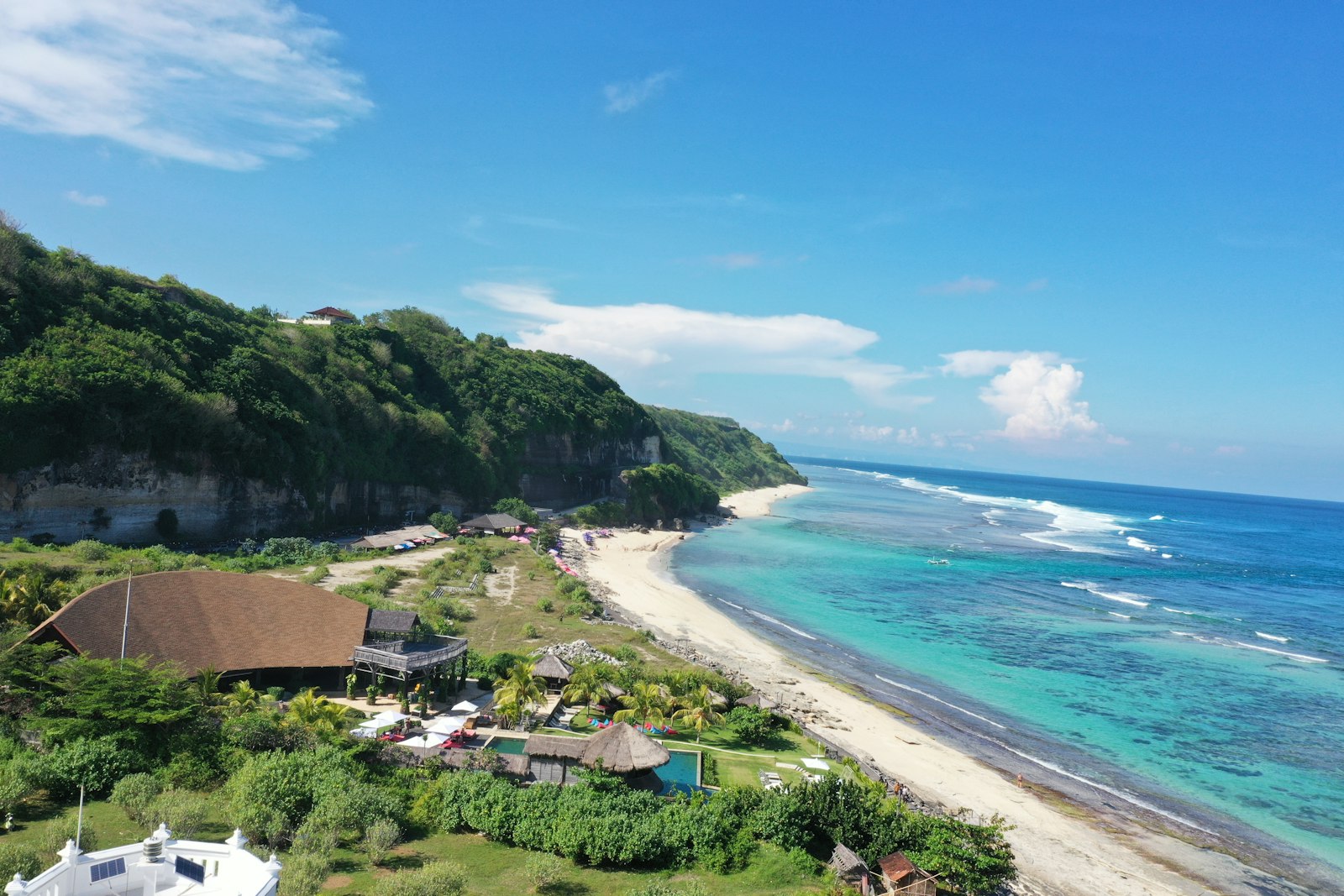
Sumba water and electricity for villas are not plug-and-play commodities once you step beyond the main towns. The honest answer is this: grid power and piped water are present and reasonably reliable in Waingapu, Waikabubak and parts of Tambolaka, but the remote coastal and inland parcels that most land investors are shown sit outside that coverage zone — or at the end of a weak spur that cuts out for hours or days at a time. A parcel that photographs beautifully on a clifftop above the Indian Ocean may have neither a functioning grid connection nor a viable well at the surface. Utility reality, not merely land price, decides whether a project is buildable at all.
This is not a reason to avoid Sumba. It is a reason to budget, test and plan before you sign anything — and to understand that the infrastructure cost hiding inside a “cheap” per-are price can be substantial.
The Electricity Picture: Grid, Gaps and the Iconic Island Pilots
Sumba is served by PLN (Perusahaan Listrik Negara), Indonesia’s state electricity company, and the main spine — running roughly from Waingapu in the east through Waikabubak and toward Tambolaka in the north-west — carries commercial-grade grid supply to most settlements along it. Towns have power. Many larger villages do too.
Sumba also carries some political weight in Indonesia’s renewable-energy narrative. The island has been part of a cluster of “Iconic Islands” targeted in various government pilot programmes to demonstrate 100-percent renewable electricity on a manageable geographic scale. Wind, solar and micro-hydro installations exist on the island, and the programme has attracted donor and NGO interest for over a decade. That is real, and it matters for the narrative around Sumba.
What the “Iconic Island” framing does not tell you is where those installations sit relative to your parcel, how reliably they feed the local grid, and whether a beachfront clifftop twenty kilometres from the nearest substation benefits at all. Remote coastal areas — the ones most heavily marketed to foreign investors — sit at the end of long, lightly maintained distribution lines. Voltage fluctuations are common. Outages during heavy rain and dry-season maintenance windows can run to days. Single-phase supply, where it arrives at all, may not support the electrical load of a functioning villa.
What High-End Builds Actually Do
The established luxury projects in West Sumba do not run on PLN grid alone. The model that serious hospitality developers use is a hybrid: solar photovoltaic arrays with lithium or lead-acid battery banks provide the baseload; a diesel or LPG generator covers peak demand and acts as the emergency fallback. Some properties integrate small wind capacity where the coastal exposure makes it viable.
This is not exotic or experimental. It is standard project engineering for remote Indonesian island sites, and off-grid power for Sumba villas follows the same logic as similar builds in eastern Flores, the Mentawai islands or remote Raja Ampat. The difference between a competently designed hybrid system and a grid-dependent build in a supply-unreliable area is the difference between a functioning resort and one that is constantly apologising to guests about the lights.
The cost of getting this right is not trivial. A solar-battery-generator system sized to support a two-to-three villa boutique property — say, continuous supply of 15–30 kWh per day with meaningful storage — will require substantial capital outlay before a single tile is laid. Equipment must be brought in from Bali or Java; logistics through Tambolaka or Waingapu add freight cost and lead time. Generator diesel arrives by road, and in the wet season some access tracks are impassable. Build this into your financial model from the start, not as a line item to fill in later.
Grid Connection: How to Check
If a broker or seller tells you a parcel “has electricity,” ask for the PLN connection certificate (Sertifikat Laik Operasi / SLO) or a recent utility bill in the current owner’s name showing the meter ID. Absent that, visit the PLN district office (Unit Layanan Pelanggan) covering the relevant area and ask directly whether the parcel’s location falls within the existing service zone and what the process and cost of a new connection would be. The connection process requires a formal application, an installation inspection and a fee schedule that varies by installed capacity. None of this is secret, but none of it is automatic.
Confirm also whether the nearest transformer substation has spare capacity. In areas experiencing rapid development, a substation may be at or near its design limit, which means new connections either wait for an upgrade or pay to contribute to one.
Water on Remote Sumba Land: No Piped Supply, Self-Provided Everything
There is no piped municipal water supply to remote Sumba land parcels. Full stop. In the towns — Waingapu, Waikabubak, parts of the Tambolaka corridor — PDAM (Perusahaan Daerah Air Minum, the regional water utility) supplies households through a piped network of variable quality and pressure. Outside those corridors, you provide your own water from the moment you take possession.
The options are surface-water collection (rainwater cisterns, seasonal streams), open dug wells and lined boreholes. In practice, any serious build on remote Sumba land relies on a borehole drilled to a productive aquifer, complemented by above-ground storage tanks and a treatment system before water enters the villa’s pipework.
What Borehole Work on Remote Land in Indonesia Actually Involves
Borehole water for remote land in Indonesia is not a guaranteed resource. Hydrology varies sharply across Sumba. West Sumba receives substantially more rainfall than the semi-arid east, and aquifer depth, yield and quality are highly site-specific. Two parcels one kilometre apart can produce completely different borehole results: one might hit a productive freshwater aquifer at 30 metres; the other might encounter saline intrusion at depth, or rock formations that require expensive casing and yield brackish water.
The correct process is a hydrogeological assessment before purchasing a parcel, or at least before committing development capital. A licensed drilling contractor can drill a test bore, measure yield in litres per hour at static water level, and provide a water sample for laboratory analysis covering pH, total dissolved solids, bacterial contamination and mineral content. Without this data you do not know what you have. You are speculating on a resource that the whole project depends on.
A hydrogeological desk study and initial test bore on a remote Indonesian island site can take several weeks to schedule, access and complete. Factor that into your due-diligence timeline — it is not a one-week exercise.
Storage and Treatment
Even where a productive aquifer exists, borehole water needs to be held and treated before it is safe for use in a hospitality context. Standard practice is: a submersible pump in the bore raises water to an elevated or ground-level storage tank (polyethylene or concrete cisterns ranging from 5,000 to 50,000 litres depending on demand); a filtration train covers sediment, iron and manganese removal; UV or chlorination covers bacterial kill; a pressure pump distributes to the building network. In an operational villa catering to guests, water quality testing should be routine, not a one-time check at commissioning.
If borehole yield is marginal, a rainwater harvesting system on villa roofs adds a secondary source, which is useful in West Sumba’s wetter months but unreliable in the long dry season. Trucked water is available in some districts as a backup but adds significant recurring cost and is not a substitute for a proper supply system.
How This Changes the Budget and the “Cheap Land” Calculation
The per-are land prices marketed for Sumba beachfront — indicatively in the IDR 22–24 million per are range for West Sumba, or broader ranges depending on location and title type, based on current listings — can look compelling against Bali hotspot comparables. The gap is real. But a parcel that has no grid access and no confirmed water source is not priced against a Bali parcel with both. It is priced against its own infrastructure cost, which you are absorbing.
Self-provided utilities do two things to the financial model. First, they raise total build cost above the villa construction per-m² figure. Published guidelines for remote Sumba builds suggest an all-in premium of roughly 10–30% above an equivalent Bali project when utilities, access roads, logistics and contingencies are honestly counted. No robust Sumba-specific construction survey has been published; that range is inferential, derived from practitioner accounts rather than a formal dataset. Treat it as directional and commission a proper bill of quantities for your specific site before you model returns.
Second, self-provided utilities carry ongoing operating cost. Diesel for the generator, replacement of solar battery banks every 8–12 years at current lithium pricing, pump maintenance, filter replacement, water testing, and the skilled technician time to keep these systems running — all of these are recurring outlays that reduce net operating margin on a rental property. A villa that looks attractive on gross revenue projections can look considerably less so once the utility carry is properly accounted for.
None of this makes Sumba development unviable. It makes it a project that rewards investors who plan carefully and penalises those who assume Bali-style infrastructure at frontier-island prices.
If you want a preliminary read on how utilities affect the specific parcel you’re considering, use our enquiry form or reach us via WhatsApp at 6281128590000. We can help you structure the right questions to ask before committing due-diligence spend.
West Sumba vs East Sumba: Does Location Change the Utility Picture?
The differences matter. West Sumba — with Tambolaka airport (TMC) as the main access point, and the corridor running south toward Wanokaka, Kodi and the surf zones near Nihi — is where most of the premium tourism investment has concentrated. The wetter climate of the west means groundwater resources are generally more accessible; some areas have reasonably shallow aquifers. Grid infrastructure, while still unreliable at the coastal fringe, is better developed than in the more remote inland and southern zones.
East Sumba, centred on Waingapu with its own airport (WGP), is considerably drier — semi-arid in places, with pronounced seasonality. Water is the harder problem here. Aquifers can be deep or saline. Borehole results are less predictable, yields are often lower and treatment requirements more demanding. East Sumba land is typically priced lower, and part of the discount reflects exactly this: more infrastructure work per hectare of developable land.
Neither is inherently unsuitable for development, but the utility budget for the same-footprint villa is likely to differ between the two regions. An engineering feasibility study should be site-specific, not island-wide.
Practical Checklist Before You Assume Utility Viability
- Grid electricity
- Ask the seller for the PLN connection certificate or an active meter in their name. Visit the relevant PLN district office, confirm the parcel’s service zone, and get a written cost estimate for a new connection at the capacity you need. If no connection exists, budget for a hybrid solar-battery-generator system and cost it properly with a qualified electrical engineer.
- Water supply
- Commission a hydrogeological assessment covering the specific parcel. Do not accept verbal assurances about nearby wells or streams — site-specific testing is the only data that counts. Drill a test bore, measure yield and have the water analysed in a certified laboratory before committing development capital.
- Generator fuel logistics
- Identify the nearest diesel supply point and confirm road access in both wet and dry seasons. Fuel delivery to a remote site in West Sumba can be a significant logistical and cost line; make sure your operating model reflects actual supply-chain friction, not assumed convenience.
- Build cost modelling
- When comparing Sumba land prices with Bali, include full utility-provision cost in the Sumba column: borehole drilling and casing, pump and storage tank, treatment system, solar array and battery bank, generator, and distribution infrastructure. A Bali plot with grid and PDAM supply competes on a different cost basis than a Sumba plot where you are self-providing both.
- Ongoing operating cost
- Build utility maintenance and replacement into your net-yield model. Battery bank replacement, generator service intervals, filter consumables and water testing are not one-time costs. They recur, and on a remote island they recur at a logistics premium.
What Sellers and Brokers Often Skip
Land marketing in Sumba moves quickly to scenery and price-per-are comparisons. The slope of the land to the sea, the colour of the water, the adjacency to a famous resort’s “halo effect” — these are the images and framing that appear in the pitch deck. Utility reality tends to surface late, if at all, and often only in response to direct questioning.
This is not necessarily bad faith. Sellers may genuinely not know the borehole yield on a parcel they have held as raw land. But it creates an information gap that falls entirely on the buyer to close. The cost of closing it — a proper hydrogeological study, an electrical feasibility assessment, confirmation with PLN — is small relative to land acquisition cost. Skipping it because it feels like a delay is how projects run into expensive surprises six months into construction.
The independent and conservative position is to treat utility confirmation as a pre-contract condition, not a post-settlement action item. If a seller resists allowing a test bore or an electrical feasibility visit before you exchange, that itself is information worth weighing.
A Note on No-Infrastructure Promise
No utility arrangement, infrastructure access or government supply programme underwrites your investment return. Grid availability and PLN supply terms can change. Aquifer yields can decline under increased abstraction. Policies around renewable-energy pilots may shift with budget or political priorities. Any projection of rental income, occupancy or capital appreciation that is built on assumed utility continuity without a self-sufficient fallback is carrying unmodelled risk.
This publication provides general information for investors doing preliminary research. It is not financial advice, legal advice or engineering advice. Before committing capital, verify the specific utility situation on the actual site, engage a licensed Indonesian notary (notaris) and PPAT for title due diligence, and commission independent professional advice from qualified engineers, legal counsel and tax advisers with NTT experience. No one can pay to change what we publish; if you proceed with a project partner or operator through our referral, they may pay us a referral fee at no extra cost to you.
Questions about how to structure a utility feasibility study, or about which professionals cover Sumba specifically? Reach us at our enquiry form or WhatsApp 6281128590000 — or email [email protected]. We are happy to help you frame the right questions before you spend a dollar.
Frequently Asked Questions
Does Sumba have grid electricity available for villa builds?
Grid electricity is available in Sumba’s main towns and along the primary road corridor linking Waingapu, Waikabubak and Tambolaka. Remote coastal parcels — especially clifftop and beachfront sites marketed to investors — are often beyond the reliable service zone or at the end of lines with significant reliability issues. Most professional villa developers in West Sumba install hybrid solar-battery-generator systems rather than depending on PLN grid supply alone. Confirm grid availability with the relevant PLN district office before assuming it exists at your specific site.
Can you drill for water on any Sumba land parcel?
Drilling is physically possible on most parcels, but productivity is not guaranteed. Aquifer depth, yield and water quality vary considerably across the island. West Sumba’s higher rainfall generally supports more accessible groundwater; East Sumba’s drier climate means shallower aquifers can be unreliable or saline. A hydrogeological assessment and test bore on the specific site are the only reliable way to determine whether a viable water source exists and at what depth and yield. Commission this before committing development funds, not after.
How much does off-grid power infrastructure cost for a Sumba villa project?
There is no reliable published benchmark for off-grid power in Sumba specifically. Cost depends on system scale (kWh capacity, battery storage, generator size), equipment choices, transport logistics and installation complexity at the site. As a directional point, practitioners working on remote Indonesian island builds suggest that self-provided utilities — power, water, access — can add roughly 10–30% to total project cost compared with an equivalent Bali build that benefits from grid and PDAM connections. This is inferential and not based on a formal Sumba construction survey; treat it as a planning indicator and commission a site-specific bill of quantities from a qualified engineer.
Is rainwater harvesting a viable primary water source for a villa in Sumba?
In West Sumba, where annual rainfall is relatively high, roof-catchment rainwater harvesting can be a useful supplementary source and a cost-effective buffer during the rainy season. It is generally not adequate as a primary source for a functioning villa year-round, particularly in the long dry season when rainfall is scarce. A properly drilled and cased borehole reaching a productive aquifer remains the standard foundation for water supply on remote Sumba land. Rainwater collection works best as a secondary input that reduces pump hours and extends borehole life, not as a replacement for groundwater infrastructure.
Do I need to factor utility costs into my Sumba land price comparison with Bali?
Yes — this is one of the most important adjustments investors underestimate. Sumba beachfront land is cheaper per are than Bali hotspot comparables in terms of the raw asking price. But a Bali parcel typically comes with grid electricity and PDAM water at the property boundary; a remote Sumba parcel comes with neither. The cost of self-providing both — borehole, storage, treatment, solar array, battery bank, generator, distribution — is a real capital expenditure that belongs in the Sumba column, not as a footnote. Including it gives a fairer basis for comparison and a more honest total project cost estimate.