How to read this: Sumba Villa Investment is an independent investment-intelligence guide — we research, compare and explain Sumba land and villa opportunities, then route serious enquiries to a vetted partner. We are not a broker, developer, financial adviser, notary or law firm, and this is general information, not investment, tax or legal advice. Foreigners cannot own freehold (Hak Milik) land in Indonesia, and nominee arrangements are risky and may be unlawful — never rely on them. Figures here are indicative ranges and can change; we never promise returns. Always do your own due diligence and verify everything with a licensed Indonesian notary (PPAT) and qualified counsel before you commit.
Indonesia green zone building restrictions are provisions within the national and regional spatial planning framework that prohibit or severely limit construction on parcels designated as protected, conservation, agricultural, or coastal buffer zones. On any given piece of land in Indonesia, the controlling document is not the seller’s brochure — it is the RTRW, the Rencana Tata Ruang Wilayah, which is the regional spatial land-use plan that every province, regency, and municipality is legally required to produce, publish, and enforce under Law No. 26 of 2007 on Spatial Planning. If your parcel sits inside a zone where building is prohibited, a valid BPN certificate does not make it buildable. These are two separate legal questions, and conflating them is one of the most expensive mistakes a Sumba land buyer can make.
This guide unpacks the zoning framework as it applies to Sumba specifically — LP2B agricultural land protection, green and conservation zones, coastal setbacks, and the practical steps for confirming a parcel’s status before any money moves. It does not apply Bali templates to a different island. Sumba sits within the Province of East Nusa Tenggara (NTT), which operates its own provincial RTRW alongside the four regency-level plans covering Sumba Barat Daya, Sumba Barat, Sumba Tengah, and Sumba Timur. The specifics matter. General Bali-sourced advice does not cover them.
Important framing: what follows is general information for educational purposes, not legal advice. Zoning is regulation-dependent and subject to change when Perda (regional regulations) are revised. The only way to confirm a parcel’s zone designation is to check the current Perda and RTRW with the relevant Dinas PUPR (Public Works and Housing Office), Bappeda (Regional Planning Agency), and BPN (National Land Agency) for the kabupaten in which the land sits. A licensed Indonesian notary, PPAT, and qualified property counsel must conduct your actual due diligence.
What the RTRW Actually Is — and Why It Controls Everything
The RTRW is not an advisory document. It is a regional regulation — a Perda — that carries the force of law. Every square metre of land in Indonesia is assigned a zone designation within that plan, which specifies its permitted use: residential, commercial, agricultural, tourist, conservation, industrial, or protected. Building permits (IMB, now called PBG under the Omnibus Law framework) are issued against the zone designation, not against the certificate alone. A parcel with a clean Hak Milik certificate but a conservation-zone designation will not receive a building permit for a villa, regardless of how the seller describes it.
The RTRW hierarchy in Indonesia runs from the national level (RTRWN), through the provincial level (RTRWP NTT), down to regency-level plans (RTRW Kabupaten). For land in Sumba, the applicable regency RTRW is the primary reference — check it for the specific kabupaten where your parcel sits. These plans are reviewed and updated approximately every twenty years, though interim revisions (via Perda or government regulation) can change specific designations. The version that governs your parcel is the currently enacted Perda, not a plan you found referenced in a 2018 property listing.
An important point about what the RTRW is not: it is not something that a broker can access on your behalf via a quick phone call. A proper rtrw zoning check indonesia requires written confirmation from Bappeda or Dinas PUPR, obtained formally, specifying the zone designation for the specific cadastral parcel (identified by NIB or SHM number, not just an address or village name). Verbal assurances are worthless for this purpose.
LP2B: Sustainable Agricultural Land That Cannot Be Converted
LP2B — Lahan Pertanian Pangan Berkelanjutan, or Sustainable Food Agricultural Land — is one of the most commonly misunderstood protections in Indonesian land law, and one of the most relevant to Sumba buyers looking at parcels marketed as “ready to build.”
LP2B is established under Law No. 41 of 2009 on the Protection of Sustainable Food Agricultural Land. Article 44(1) of that law prohibits the conversion of designated LP2B land except for limited strategic public-interest projects, and even those exceptions require replacement land of equivalent extent and quality to be provided. Private villa development, resort construction, or commercial land speculation does not qualify as the kind of strategic project that triggers the conversion exception. If a parcel is inside an LP2B designation, you cannot build a villa on it. Full stop.
LP2B land protection applies to Sumba. The island’s regency-level RTRW documents include agricultural zone designations that incorporate LP2B classifications, reflecting the fact that rice cultivation and subsistence agriculture are not marginal activities on the island — they are the primary economic and food-security base for the majority of the population. The “Sumba as next resort destination” narrative is real in the surf-and-ultra-luxury coastal micro-market. The broader island economy is predominantly agricultural, and the spatial planning system reflects that, even where individual land brokers prefer not to mention it.
The critical verification problem is this: no publicly accessible polygon map showing LP2B designations at the village or parcel level for specific Sumba locations has been identified through independent research. No one should claim, on the basis of a listing page or broker statement, that a named area in Sumba is or is not LP2B-designated without checking the current regency Perda and RTRW directly. This is not a technicality. It is a binary risk — LP2B means no private conversion, and a seller who does not disclose it (or does not know) leaves the buyer with a parcel that cannot be developed as intended.
What to do: request written confirmation from Bappeda or Dinas PUPR of the zone designation for the specific parcel, citing the certificate number and NIB (land block number). Ask explicitly whether any part of the parcel falls within LP2B or the LP2B buffer zone (KP2B). If the answer is uncertain, treat it as LP2B until proven otherwise.
Green Zones and Other Protected Designations
Beyond LP2B, the RTRW designates several categories of protected and restricted land where building is prohibited or heavily conditioned. These vary in label between regencies and plan versions, but the typical categories relevant to Sumba buyers include:
- Kawasan Lindung (Protected Area)
- Land designated for environmental protection — watershed catchments, hilltop conservation zones, steep slopes above defined gradients. Building permits are generally not available inside kawasan lindung. Sumba’s topography includes steep escarpments and river catchments that may fall within these designations, particularly on parcels marketed as “hilltop” or “clifftop” villas with panoramic views. The view from those slopes is partly explained by the fact that building on them is restricted.
- Kawasan Hutan (Forest Area)
- Land classified as state forest under the Ministry of Environment and Forestry. Forest area classification is separate from and can overlap with BPN land titling — it is entirely possible, and documented across Indonesia, for an area to carry both a BPN certificate and a forest-area designation by the Ministry. Where this overlap exists, the forest-area designation typically prevails for permitting purposes. Clearance or conversion of forest area requires approval from the Ministry and is subject to forestry law, not just spatial planning law. Sumba has significant forest zones, including dry and semi-deciduous forest on the central and eastern parts of the island.
- Kawasan Rawan Bencana (Disaster-Prone Zone)
- Land identified as subject to flooding, landslide, coastal inundation, or other natural hazards. Building is not automatically prohibited in all disaster-prone zone categories, but permits carry additional conditions and some sub-categories do prohibit permanent structures. Sumba’s southern and western coasts include areas exposed to Indian Ocean swell and storm surge — this can intersect with disaster-zone designations alongside the coastal setback rules discussed below.
- Kawasan Pariwisata (Tourism Zone)
- This one operates differently: it is a zone where tourism development is the intended use. Land in a kawasan pariwisata is generally permissible for resort or villa construction, subject to meeting IMB/PBG conditions. Not all of Sumba’s coastal land sits within a tourism zone, however. The presence of a tourism zone in one part of a regency does not mean that adjacent coastal land automatically shares that designation. The specific parcel must be checked.
The Marketing Claim That Does Not Hold Up: “Sumba Has No Rigid Zoning Map”
This claim has appeared in at least one developer-facing FAQ targeting international buyers interested in Sumba land. The argument goes roughly: Sumba is frontier, regulations are less developed, land use is more flexible than Bali, and you can build where you want with the right permits.
It is a marketing claim, not a legal assessment, and it directly contradicts the national legal framework. Law No. 26 of 2007 on Spatial Planning requires all Indonesian regencies to produce and maintain RTRW documents. NTT’s four Sumba regencies have done so. LP2B protection under Law No. 41 of 2009 applies nationally, including in NTT. Coastal setback rules derive from Government Regulation No. 64 of 2010 and relevant provincial and local regulations. None of these instruments contain a carve-out for Sumba or NTT.
What is accurate is that enforcement has historically been less consistent in remote NTT regencies than in Bali or Java. But inconsistent enforcement does not mean legal permission. A building erected in a protected zone without a valid PBG can attract a demolition notice years after construction is complete. Buyers who were told “it’s flexible here” have discovered that flexibility did not extend to protecting their investment when a new bupati (regent) decided to enforce existing rules. The answer to “can you build on green zone land indonesia” is no — and the enforcement risk, even if historically low, is not the same as legal authorisation.
Coastal Setbacks in Sumba: What the Rules Say vs What Sellers Say
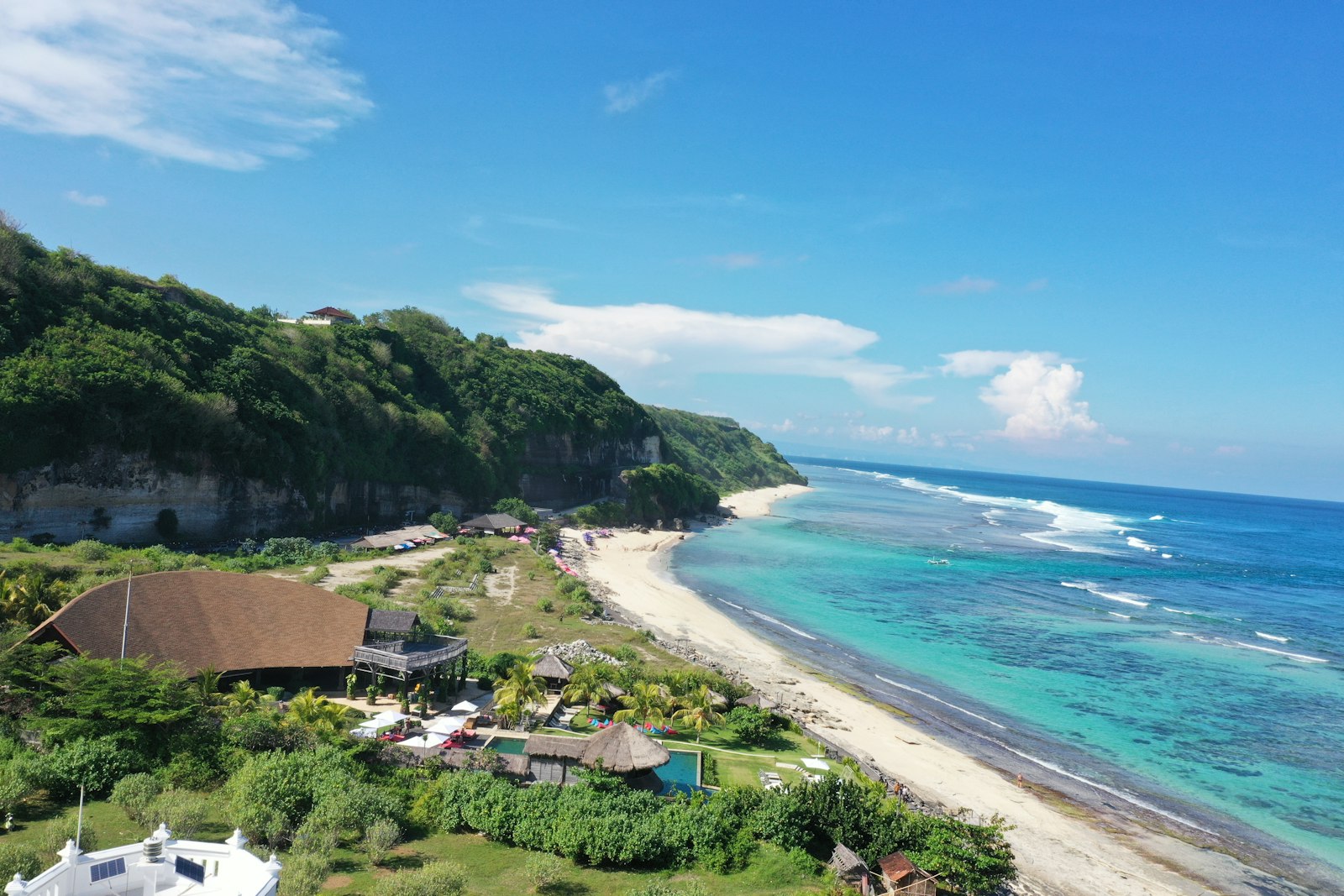
Coastal setbacks — sempadan pantai — are buffer zones measured landward from the mean high waterline within which permanent construction is prohibited or restricted. They are not a uniquely Sumba issue; they derive from national law (including Government Regulation No. 64 of 2010 on Mitigation of Coastal Disasters) and are applied through provincial and local regulation. Sumba’s long and largely undeveloped Indian Ocean coastline is subject to these rules.
One developer-facing source circulating in the Sumba buyer market has quoted specific metre figures for Sumba’s coastal setback — citing a 100-metre buffer for permanent concrete structures, with narrower bands for different construction types under specified local approvals. This is a single-source, uncited claim from a developer FAQ. The actual applicable distance is set by the current NTT provincial regulation and the relevant regency spatial plan, and it may differ from what any individual developer states. Treat every setback figure you read in marketing material as unverified until you receive written confirmation from Dinas PUPR or the relevant kabupaten authority.
The practical implications are significant. A beachfront parcel sold on the basis of its sea frontage may have its most marketable metres — the ones closest to the waterline — inside the setback zone where permanent structures are prohibited. This does not necessarily make the parcel un-buildable, but it does reduce the buildable footprint, affects the siting of any villa, and shapes the project’s economics. Buyers who do not confirm the applicable setback before signing a lease or purchase agreement sometimes discover this after the fact, at which point they either proceed with a constrained project or attempt to exit an agreement.
The beachfront land page on this site covers setback verification in more detail. The point here is that the sempadan pantai is a subset of green zone and protected zone restrictions — it is not a separate legal universe. It must be confirmed alongside, not after, the RTRW zoning check.
How to Actually Conduct an RTRW Zoning Check for a Sumba Parcel
The process for an rtrw zoning check indonesia on a Sumba parcel has several steps. None of them can be delegated to the seller or the seller’s broker. Run them through your own counsel and directly with government offices.
| Step | Where to Go | What to Request | Key Risk Caught |
|---|---|---|---|
| 1. Identify the governing Perda | Bappeda of relevant kabupaten (Sumba Barat Daya / Sumba Barat / Sumba Tengah / Sumba Timur) | Current enacted RTRW Perda number, date, and any interim revision Perda | Outdated plan version; interim rezoning not reflected in marketing materials |
| 2. Confirm parcel zone designation | Dinas PUPR of relevant kabupaten | Written statement of zone designation for the specific parcel (cite certificate number and NIB/land block) | Protected, conservation, or LP2B designation; tourism vs agricultural designation mismatch |
| 3. Check LP2B status | Dinas Pertanian (Agriculture Office) of relevant kabupaten | Whether the parcel or surrounding area is designated LP2B or KP2B (LP2B buffer) | Un-buildable agricultural land sold as development land |
| 4. Check forest-area classification | Balai Pemantapan Kawasan Hutan (BPKH) or Ministry of Environment and Forestry regional office | Whether the parcel overlaps with or is adjacent to kawasan hutan designation | Forest-area overlap not visible from BPN certificate alone |
| 5. Confirm coastal setback (beachfront parcels) | Dinas PUPR and NTT provincial authority | Applicable sempadan pantai distance under current NTT Perda and kabupaten rule | Reduced buildable footprint; villa siting inside no-build buffer |
| 6. Cross-check with BPN | BPN kabupaten office | Physical and juridical data extract (informasi data fisik dan yuridis); confirm no transfer block or encumbrance linked to zone violations | Existing permit refusals or enforcement orders not visible on face of certificate |
All of these confirmations should be obtained in writing, not verbally, and they should name the specific parcel. A written confirmation from Bappeda that an area in general is zoned for tourism is not the same as confirmation that your 1.2-hectare parcel at a specific cadastral number sits within that zone and not partially within an adjacent protected zone.
West Sumba vs East Sumba: Does Zoning Risk Differ?
The short answer is: yes, in character if not always in legal framework. Both parts of the island operate under the same national legal architecture — RTRW, LP2B, forest classification, coastal setback — but the on-the-ground zoning profile differs between West and East Sumba.
West Sumba and Sumba Barat Daya, accessible via Tambolaka Airport (TMC) and containing most of the marketed beachfront and surf-proximate land, have seen the most active tourism development intent. The Wanokaka coast and the areas near Nihi Sumba — the ultra-luxury resort operation that began as Nihiwatu in 1988 and was redeveloped after its 2012 acquisition — have attracted the majority of buyer attention. Parts of this coastline sit within designated tourism zones in the regency RTRW, which is precisely why development there has been possible. But the tourism zone designation is not continuous across the entire West Sumba coastline, and parcels outside it face the same RTRW constraints as any other Indonesian land.
The LP2B risk is arguably higher in the interior and in East Sumba. The eastern regency — Sumba Timur, served by Waingapu’s Umbu Mehang Kunda Airport (WGP) — is more agricultural in its economic character. Land marketed in East Sumba at lower prices often sits closer to active rice-cultivation and dryland farming areas, which carry a meaningfully higher probability of LP2B designation than coastal cliff land in the west. Buyers comparing price points between east and west should factor in that a lower asking price may reflect both lower demand and a more complex zoning profile, not just distance from the airport.
Neither kabupaten publishes a publicly accessible online polygon map that lets you confirm a parcel’s zone designation without engaging the relevant offices. This is not unusual for NTT regencies — digital land-use mapping infrastructure at the parcel level is less developed than in Bali or Java. It means the verification steps described above cannot be shortcut via an online lookup; they require direct engagement with the relevant government offices, either by your counsel or with formal written requests.
What Happens If You Build in a Restricted Zone
The consequences range from inconvenient to severe. Understanding them is part of why the zoning check belongs before any agreement is signed, not after construction begins.
At the permit-application stage, a building permit (PBG, formerly IMB) submitted for a parcel in a prohibited zone will be refused. No PBG means no legal building. Proceeding without a PBG exposes the structure to administrative enforcement — this is not a theoretical risk in Indonesia; demolition notices have been issued against unpermitted structures, including in tourist areas, and enforcement tends to become more likely when political attention increases or when community complaints create pressure on local government.
For LP2B land specifically, the Law No. 41/2009 framework includes criminal sanctions for illegal conversion. The penalties are directed at the person or entity that carries out the conversion. This is not background noise — it is explicit statutory language. Investors who were told the land was “agricultural but convertible” and relied on that assurance without written RTRW confirmation have discovered the hard way that the seller’s characterisation does not transfer the legal risk.
For land in or adjacent to forest areas, the Ministry of Environment and Forestry has active enforcement capacity in NTT, and the political salience of forest-area violations has increased in the past decade. Structures built in classified forest areas without forest-release clearance face enforcement regardless of BPN certificate status.
One further dimension specific to Sumba: zoning violations in areas where adat community claims exist can accelerate community opposition. A community that was already uncertain about a land transaction may find that a building permit refusal or enforcement notice validates their concerns and emboldens protest. The legal and customary risks in Sumba are not fully separable.
The Verification Sequence: Zoning Sits Alongside Title, Not After It
A common mistake in the Sumba buyer sequence is treating title verification as the primary check and zoning as a secondary or confirmatory step done after an agreement is in place. The logic seems reasonable — first confirm the seller owns the land, then confirm what you can do with it. But in practice, signing an agreement before zoning is confirmed puts the buyer in a difficult position: they have committed legally or financially to a parcel that may prove un-buildable, and unwinding that agreement depends on whatever refund provisions the contract contains.
The correct sequence runs both checks in parallel, before any deposit or agreement. Your licensed notary and PPAT handle the title and encumbrance verification at BPN. Your property counsel simultaneously engages Bappeda and Dinas PUPR to confirm zone designation. The adat validation — confirming with village head and relevant kabisu that the land transaction has customary community awareness — runs alongside both of these, not after.
If any one of the three tracks — title, zoning, adat — comes back with a problem, that problem must be resolved before money moves. In Sumba’s frontier market, with its thin secondary buyer pool and limited exit liquidity, there is no “I’ll deal with it later.” Later is expensive.
Frequently Asked Questions
Can you build on green zone land in Indonesia?
Generally no. Green zones and protected zone designations in the Indonesian RTRW framework prohibit or severely restrict permanent construction. LP2B (Sustainable Food Agricultural Land) cannot be converted for private development under Law No. 41 of 2009. Conservation zones (kawasan lindung), forest areas (kawasan hutan), and coastal setback buffers (sempadan pantai) each carry their own building restrictions. In some cases, partial or conditional development is permitted with specific approvals — but these are exceptions requiring formal government clearance, not a default option. Whether a specific parcel is in a restricted zone must be confirmed with Dinas PUPR, Bappeda, and the relevant kabupaten authority for the land in question. A certificate from BPN does not confirm zone designation and does not substitute for that check.
How do I do an RTRW zoning check in Indonesia for a Sumba parcel?
The process requires written engagement with the Bappeda and Dinas PUPR of the relevant kabupaten — either Sumba Barat Daya, Sumba Barat, Sumba Tengah, or Sumba Timur, depending on where the parcel sits. You identify the currently enacted RTRW Perda, then request written confirmation of the zone designation for your specific parcel, citing the certificate number and NIB. LP2B status should be confirmed separately with Dinas Pertanian. Forest-area classification requires a separate check with the Ministry of Environment and Forestry’s regional office (BPKH). None of these can be done by the seller on your behalf, and verbal assurances from any party do not substitute for written official confirmation. A licensed Indonesian notary, PPAT, and property counsel should manage or supervise this process.
What is LP2B and does it apply to Sumba?
LP2B is Lahan Pertanian Pangan Berkelanjutan — Sustainable Food Agricultural Land — designated under Law No. 41 of 2009. Designated LP2B land is protected from conversion to other uses except for tightly defined strategic public-interest projects that require equivalent replacement land. Private villa or resort development does not qualify for conversion. LP2B applies across Indonesia, including Sumba. The island’s regency RTRW documents include agricultural zone designations that incorporate LP2B classifications, reflecting Sumba’s substantial agricultural economy. No publicly accessible polygon map for LP2B designations at the village parcel level in Sumba has been found through independent research — LP2B status for a specific parcel must be confirmed directly with Dinas Pertanian and Bappeda for the relevant kabupaten.
Does the coastal setback rule apply to beachfront land in Sumba?
Yes. Coastal setback rules (sempadan pantai) apply under national law and NTT provincial regulation to land along Sumba’s coast. The precise setback distance is set by the current NTT Perda and applicable kabupaten rule — any specific metre figure cited in marketing materials or developer FAQs is a single-source, unverified claim and should not be relied upon without written confirmation from Dinas PUPR. For beachfront parcels, the setback reduces the buildable footprint: the area closest to the waterline, often the most commercially desirable, may be inside the no-build buffer. Confirm the applicable setback and map it against the parcel boundary before agreeing to any price or signing any document.
If a Sumba parcel has a valid BPN certificate, can I assume it is buildable?
No. A BPN certificate confirms who holds the registered land right and whether encumbrances are recorded against it. It does not confirm the zone designation under the RTRW, whether the land is LP2B protected, whether it overlaps with a forest-area classification, or whether the applicable coastal setback leaves a buildable footprint. These are separate regulatory tracks. A certificate with no encumbrances is a necessary starting point, not a sufficient one. Zoning confirmation from Dinas PUPR and Bappeda must sit alongside the BPN check — both must be completed, in parallel, before any deposit or agreement is executed.